Quick Answer: Repiling a house in Wellington typically costs $25,000 to $50,000 for a full repile of a standard three-bedroom villa or bungalow. A partial repile that replaces 10 to 30 failed piles and relevels the floor usually lands between $8,000 and $20,000. Steep sites, tight subfloor access and concrete or driven piles push full repiles to $50,000 to $80,000 or more. Replacing a handful of rotten piles like for like is usually exempt from building consent. A full repile is not, and needs an engineer and council inspections.
What’s in This Guide
- What Repiling Actually Involves
- Why So Many Wellington Homes Need Repiling
- Repiling Costs in Wellington: What to Budget
- What Drives the Price Up or Down
- Timber, Concrete or Steel Piles?
- Signs Your House Needs Repiling
- Do You Need Building Consent to Repile?
- The Repiling Process and How Long It Takes
- What to Do While the Subfloor Is Open
- Why Choose Clearcut for Repiling
- Frequently Asked Questions
What Repiling Actually Involves
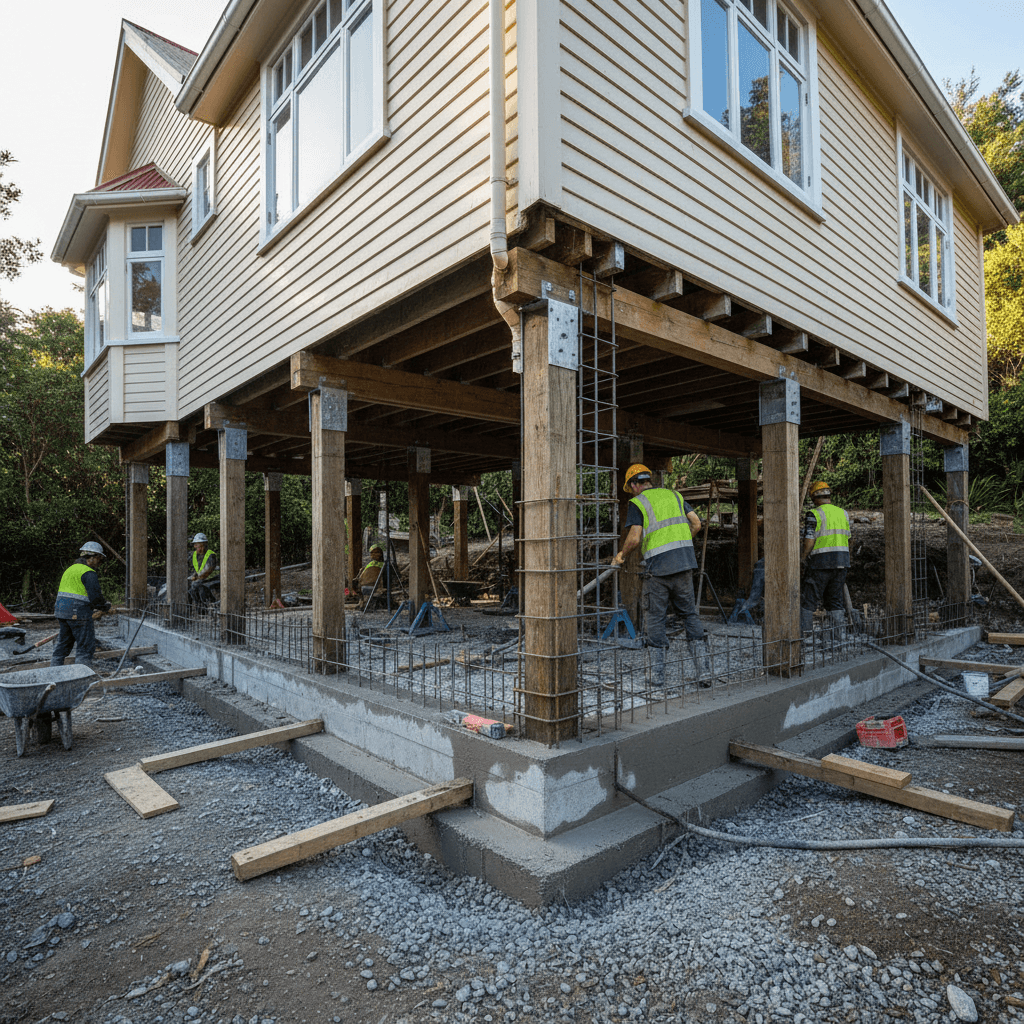
Repiling is the replacement of the piles that hold a house off the ground. Most Wellington homes built before the 1970s sit on a suspended timber floor supported by short timber piles, with bearers and joists spanning between them. When those piles rot, sink, lean or crack, the floor above them drops and the house starts to move.
The work comes in three sizes, and the price difference between them is large:
- Relevelling only. The house is jacked and packed back to level on its existing piles. Only viable when the piles themselves are still sound.
- Partial repile. The failed piles, often 10 to 30 of them, are replaced and the floor is relevelled. This is the most common job on a Wellington villa.
- Full repile. Every pile under the house is replaced, usually with new bearers where the old ones are rotten, and the house is relevelled from scratch. Common on homes that have never been repiled in 80 to 120 years.
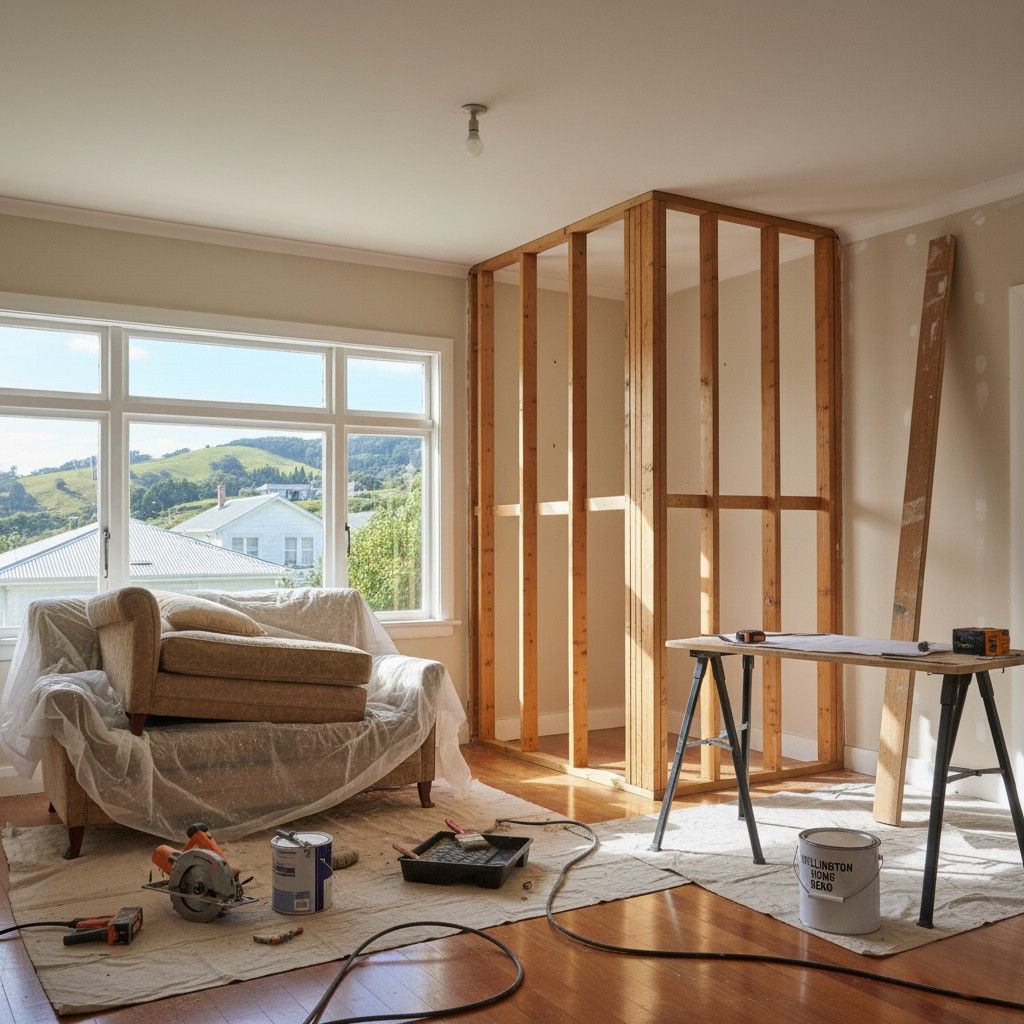
A full repile is structural work. It is a natural first stage of a larger Wellington villa renovation, because everything above the floor depends on it, and it is far cheaper to do before new kitchens, bathrooms and flooring go in rather than after.
Why So Many Wellington Homes Need Repiling
Wellington has one of the oldest housing stocks in the country, and most of it was built on timber piles. Villas in Newtown, Berhampore, Island Bay, Thorndon, Mt Victoria and Aro Valley, and bungalows in Kelburn, Brooklyn, Northland and Petone, are now 90 to 120 years old. Very few were built with the ground conditions we understand today.
Four things work against Wellington piles:
- Moisture. Damp clay, poor subfloor ventilation and downpipes discharging next to the house keep the base of timber piles wet. Rot starts at ground level, where you cannot see it without crawling under the house.
- Hillside creep. On sloping sections in suburbs like Kelburn, Brooklyn, Wadestown and Khandallah, the ground moves slowly downhill and takes the piles with it. Piles end up leaning rather than vertical, and a leaning pile carries far less load.
- Earthquakes. Shaking loosens piles in the ground and can break the connection between pile and bearer. The 2016 Kaikōura earthquake exposed this in many homes that looked fine from the street.
- Later repairs. Many villas have had piles replaced piecemeal over the decades, often with untreated or lightly treated timber that has since failed faster than the original piles around it.
The result is that repiling is one of the most common structural jobs on older Wellington homes, and one of the most misquoted, because the true condition of the subfloor is only known once someone has been under the house.
Repiling Costs in Wellington: What to Budget
These are realistic 2026 ranges for Wellington, including GST. Every job is priced after a subfloor inspection, because the number of failed piles, the access and the ground conditions decide the price far more than the size of the house.
| Scope of Work | Typical Wellington Cost | What It Usually Includes |
|---|---|---|
| Subfloor inspection and report | $300 to $800 | Pile-by-pile condition check, levels survey, moisture and borer check, scope and quote |
| Relevelling only | $5,000 to $12,000 | Jack and pack on sound piles, new packers and fixings, no pile replacement |
| Partial repile (10 to 30 piles) and relevel | $8,000 to $20,000 | Replace failed piles with H5 treated timber in the same positions, relevel, re-fix bearers |
| Full repile, standard 3-bedroom villa or bungalow | $25,000 to $50,000 | All piles replaced, relevel, partial bearer replacement, engineer’s design, building consent and inspections |
| Full repile, steep site or poor access | $50,000 to $80,000+ | Concrete or driven piles, hand excavation, retaining, crane or hillside access, geotechnical input |
| Extras that often come with it | $3,000 to $15,000 | Replacing rotten bearers and joists, relocating drains and plumbing, subfloor ventilation, underfloor insulation |
Across New Zealand, full repiles range from about $15,000 for a small cottage on flat ground to well over $100,000 for a large house on a difficult site. Wellington sits toward the upper half of that range because so much of the housing is on hillsides with limited access.
What Drives the Price Up or Down
1. Subfloor access
This is the single biggest variable. A villa with 900mm of clearance under the floor lets a builder work standing on their knees with a pile driver and jacks. A bungalow with 300mm of crawl space means every pile is dug and set by hand, lying down. The second job can cost twice as much for the same number of piles.
2. How many piles have failed
A three-bedroom villa typically has 60 to 100 piles. If the inspection finds 15 rotten piles at the damp southern side, that is a partial repile. If it finds rot in most of them, or the piles are the wrong size and spacing for the loads above, a full repile is the only honest recommendation.
3. Ground conditions and slope
Firm clay on a flat Petone or Miramar section is straightforward. A steep site in Kelburn or Wadestown may need deeper piles, concrete footings or driven piles, and sometimes a geotechnical report. Our guide to building on a slope in Wellington covers why hillside foundations cost more.
4. Pile type
H5 treated timber piles are the most affordable and the standard choice for like-for-like replacement. Precast concrete piles cost more per pile but do not rot. Driven or screw piles cost the most and are used where the ground is soft, deep or unstable.
5. Relevelling
A house that has dropped 50mm on one side needs careful, staged jacking so that plaster, tiles and joinery are not damaged. Big lifts take longer, and some cracking of old plaster is unavoidable, so budget for making good inside afterwards.
6. Consent, engineering and inspections
Where consent is needed, allow $3,000 to $8,000 for the engineer’s design and Wellington City Council fees on top of the building work. This is covered in more detail below.
7. What else is rotten
Piles rarely fail alone. Bearers sitting on wet piles are usually soft at the ends, and the bottom plates of external walls above them can be too. A good quote separates the pile work from the “if we find it” allowances so you can see both.
Timber, Concrete or Steel Piles?
| Pile Type | Relative Cost | Best For |
|---|---|---|
| H5 treated timber | Lowest | Like-for-like replacement under villas and bungalows on reasonable ground. Rated for in-ground contact and easy to fix bearers to. |
| Precast concrete | Medium | Damp sites and homeowners who want a pile that cannot rot. Common on full repiles where the subfloor will not be opened again for decades. |
| Driven or screw steel piles | Highest | Soft, filled or unstable ground and steep sites where a shallow pile will not reach load-bearing soil. Usually engineer-specified. |
Most Wellington repiles use H5 timber or a mix of timber and concrete. Steel is the exception rather than the rule, and if a quote specifies it, ask for the engineering reason.
Signs Your House Needs Repiling
Failed piles show up inside the house long before anyone looks under it. The signs below are worth a subfloor inspection, especially in a pre-1960s home that has never been repiled:
- Floors that slope, roll or feel bouncy when you walk across a room
- Doors and windows that have started to stick, or gaps opening at the top of door frames
- Cracks running diagonally from the corners of doors and windows
- Gaps opening between skirting boards and the floor, or between walls and ceilings
- A musty smell from under the house, or damp patches in the subfloor
- Piles that wobble when pushed, look black and soft at ground level, or show borer holes
- Bearers that have pulled away from the piles they sit on
- A house that has visibly dropped on one side, often the damp southern or downhill side
One or two of these can have other causes. Several together, in an old house, almost always come back to the piles.

Do You Need Building Consent to Repile?
It depends on how much you are replacing. Schedule 1 of the Building Act exempts general repair and maintenance, and MBIE’s guidance gives the example of replacing old rotten timber piles with new treated timber piles in the same positions as exempt work, provided it is not a complete or substantial replacement of the foundation.
In practice that means:
- Replacing a handful of failed piles like for like, in the same positions, with comparable materials, is usually exempt. No consent, but the work must still meet the Building Code and be done properly.
- A full repile, or replacing most of the piles, is a substantial replacement of a structural element and needs building consent from Wellington City Council, Hutt City or Porirua City, with an engineer’s design and council inspections during the work.
- Changing the pile type, layout or footing, for example moving from timber to concrete or adding piles under a new load, also needs consent because it is no longer like for like.
Where a job sits in the grey area between those, the safe options are a discretionary exemption from the council or a consent application. Guessing wrong creates a problem at sale time, because a full repile with no consent record is exactly what a buyer’s building inspector and a bank’s valuer go looking for. Consented structural work must be carried out or supervised by a Licensed Building Practitioner, and we explain what an LBP is and why it matters in a separate guide.
The Repiling Process and How Long It Takes
Step 1: Subfloor inspection
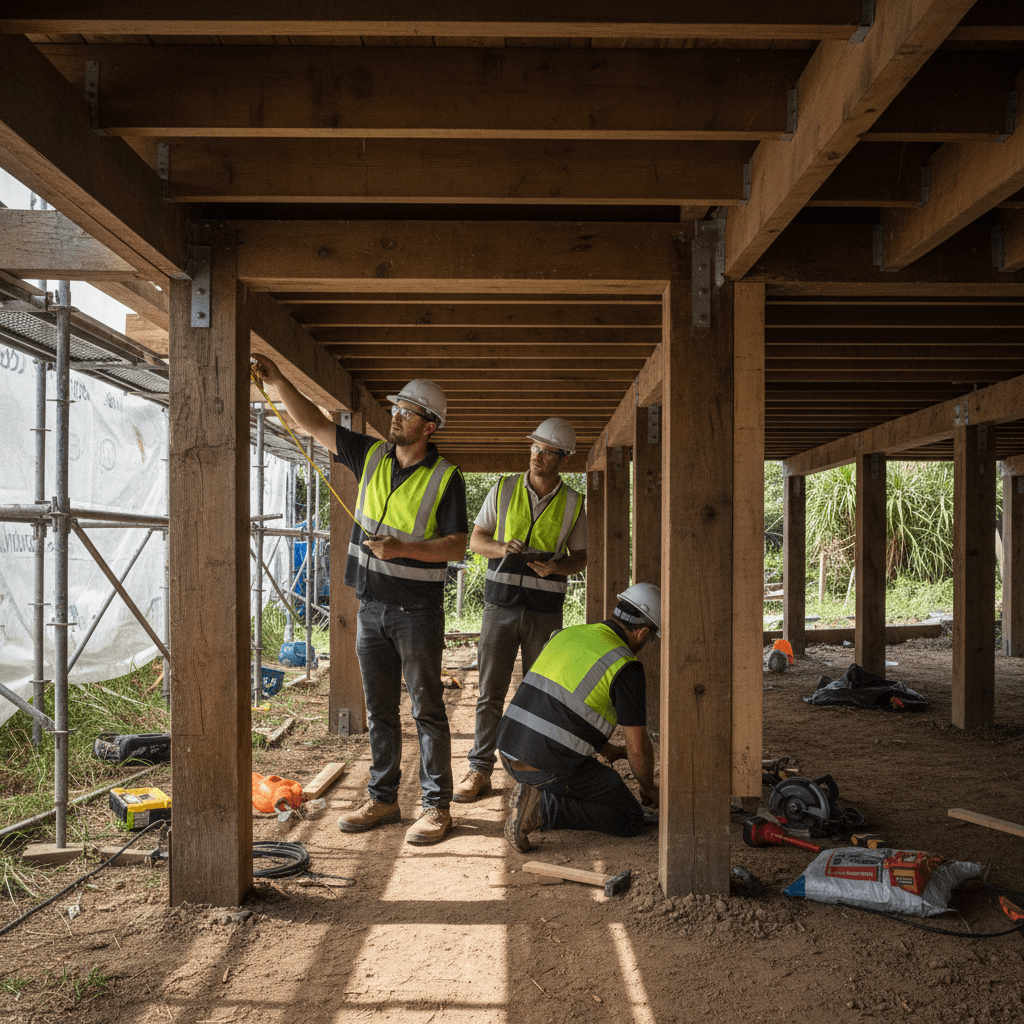
A builder crawls the full subfloor, checks every pile, measures floor levels with a laser and records moisture, borer and ventilation. This decides whether you need a relevel, a partial repile or a full repile, and produces the quote.
Step 2: Engineering and consent (full repiles)
A structural engineer designs the new pile layout to NZS 3604 or a specific design, and the consent is lodged. Wellington City Council’s statutory processing time is 20 working days, so allow four to eight weeks from lodging to starting on site.
Step 3: Jacking and pile replacement
The house is supported on temporary jacks and props, old piles are removed, new piles are set in concrete footings or driven, and bearers are fixed to them. Rotten bearers and joists are replaced as they are exposed.
Step 4: Relevelling
The house is brought back to level in stages over several days so the structure above adjusts gradually. The builder checks door and window operation as the floor comes up.
Step 5: Inspection and sign-off
Consented work is inspected by council during and after the job, and a Code Compliance Certificate is issued at the end. Keep this with the house records.
Timeline: a partial repile and relevel usually takes three days to a week on site. A full repile of a standard house takes one to three weeks on site, plus the consent lead time before it. Steep sites and hand-dug subfloors take longer. You can usually stay in the house during a partial repile. For a full repile with a large lift, plan to be out for the jacking days at least.
What to Do While the Subfloor Is Open
Repiling is the one time the underside of your house is fully accessible with a builder already there. Three jobs are much cheaper done at the same time:
- Underfloor insulation. Required for rentals under the Healthy Homes Standards and a large comfort gain for any villa. Installing it after the piles are done adds little labour.
- Earthquake strengthening. New piles with proper bearer fixings, subfloor bracing and pile-to-bearer connections are the foundation half of most residential earthquake strengthening in Wellington. Doing both together avoids paying twice for access.
- Drainage and ventilation. Fixing the downpipe and ground drainage that rotted the piles in the first place, and adding subfloor vents, is what stops the new piles going the same way.
If the inspection turns up rot in the bearers, wall plates and framing as well as the piles, it is worth stepping back and reading our guide on whether to renovate or rebuild a Wellington home before committing to the repile alone. For most villas the numbers still favour repair, but it is better to know the whole picture first.
Why Choose Clearcut for Repiling in Wellington
Repiling sits at the structural end of what we do. Our home renovation team in Wellington handles piling and foundation repairs as a standard part of villa and character home work, from the subfloor inspection through to the Code Compliance Certificate.
As Licensed Building Practitioners and NZ Certified Builders, we bring:
- A full subfloor inspection before any quote. We price what is actually under your house, and separate the fixed pile work from the allowances for anything found on the way.
- Consent and engineering handled. We work with structural engineers on the design, lodge the consent and manage council inspections.
- Hillside experience. A large share of our work is on sloping Wellington sections, where access, retaining and ground conditions decide the job.
- One team for the whole renovation. If the repile is stage one of a character home renovation, the same project manager carries it through.
- 10-year Halo Residential Guarantee. All our work is backed by independent guarantee.
Frequently Asked Questions
How much does it cost to repile a house in Wellington?
A full repile of a standard three-bedroom Wellington villa or bungalow typically costs $25,000 to $50,000 including GST, engineering and consent. A partial repile that replaces 10 to 30 failed piles and relevels the floor is usually $8,000 to $20,000. Steep sites with poor access can exceed $80,000.
How much does repiling cost per pile?
Most Wellington builders price repiling by the job rather than per pile, because access, relevelling and bearer repairs make up much of the cost. As a rough guide, a partial repile of 20 piles at $8,000 to $20,000 works out at several hundred dollars per pile installed, but a per-pile figure on its own will not give you an accurate budget.
Do I need building consent to repile my house?
Replacing a few rotten piles like for like in the same positions is usually exempt under Schedule 1 of the Building Act. A full repile, or replacing most of the piles, is a substantial replacement of a structural element and needs building consent, an engineer’s design and council inspections. If in doubt, ask the council before starting.
How long does repiling take?
A partial repile and relevel takes three days to a week on site. A full repile of a standard house takes one to three weeks on site, plus four to eight weeks beforehand for engineering and consent. Steep sites and low subfloors take longer because piles are dug and set by hand.
Can I stay in my house while it is being repiled?
Usually yes for a partial repile, since the work happens under the floor and the lift is small. For a full repile with a large relevel, plan to be out on the jacking days, as services are disconnected and the house moves. Your builder will tell you which days at the planning stage.
Timber or concrete piles: which is better for a Wellington villa?
H5 treated timber piles are the standard, cheapest option and are rated for in-ground use. Precast concrete piles cost more but cannot rot, which suits damp sites and full repiles where the subfloor will not be opened again for decades. Steel driven or screw piles are only needed on soft or unstable ground and should be engineer-specified.
Does repiling add value to a house?
Repiling protects value more than it adds it. A villa with sloping floors and rotten piles is discounted heavily by buyers, building inspectors and lenders, and a full repile with a consent record removes that discount. It also prevents the far larger costs of framing and cladding damage that follow when a house keeps moving.