Quick Answer: The best value minor dwelling builder for rental income isn’t the cheapest — it’s the one who delivers a fully consented, Healthy Homes-compliant build that tenants want to live in and that holds its value long-term. Look for Licensed Building Practitioners with minor dwelling experience, a residential build guarantee, and builds that meet tenancy compliance from day one.
What’s in This Guide
- Why Builder Choice Matters More for Rental Dwellings
- Healthy Homes Compliance: Built In, Not Bolted On
- 7 Things to Look For in a Minor Dwelling Builder
- Questions to Ask Before You Sign
- Mistakes That Reduce Rental Returns
- Why Choose Clearcut Building Solutions
- Frequently Asked Questions
Why Builder Choice Matters More for Rental Dwellings
Building a minor dwelling for yourself is one thing. Building one that a tenant will live in — and that you’ll be legally responsible for as a landlord — is something else entirely.
Under the Residential Tenancies Act, landlords carry obligations around maintenance, safety, and habitability that don’t apply to owner-occupied homes. Your builder’s workmanship directly determines whether you can meet those obligations without costly remediation down the track.
A well-built minor dwelling attracts reliable tenants, commands consistent rent, and requires minimal upkeep between tenancies. A poorly built one does the opposite — and in a small dwelling, problems like moisture, poor ventilation, or substandard insulation become apparent fast.
The builder you choose also determines your insurance position. Most landlord insurance policies require the dwelling to be fully consented with a Code Compliance Certificate (CCC). If your builder cuts corners on consenting, you may find yourself uninsurable — or unable to legally rent the dwelling at all.
For a rental minor dwelling, the stakes around builder quality are higher than a standard renovation. The margin between a good return and a liability sits squarely with who builds it.
Healthy Homes Compliance: Built In, Not Bolted On
If you’re building a minor dwelling to rent out, it must meet the Healthy Homes Standards before a tenant moves in. These aren’t optional guidelines — they’re legal requirements under the Healthy Homes Guarantee Act 2017, and they apply to all rental properties in New Zealand.
The five areas your rental minor dwelling must comply with:
| Standard | What It Means for Minor Dwellings |
|---|---|
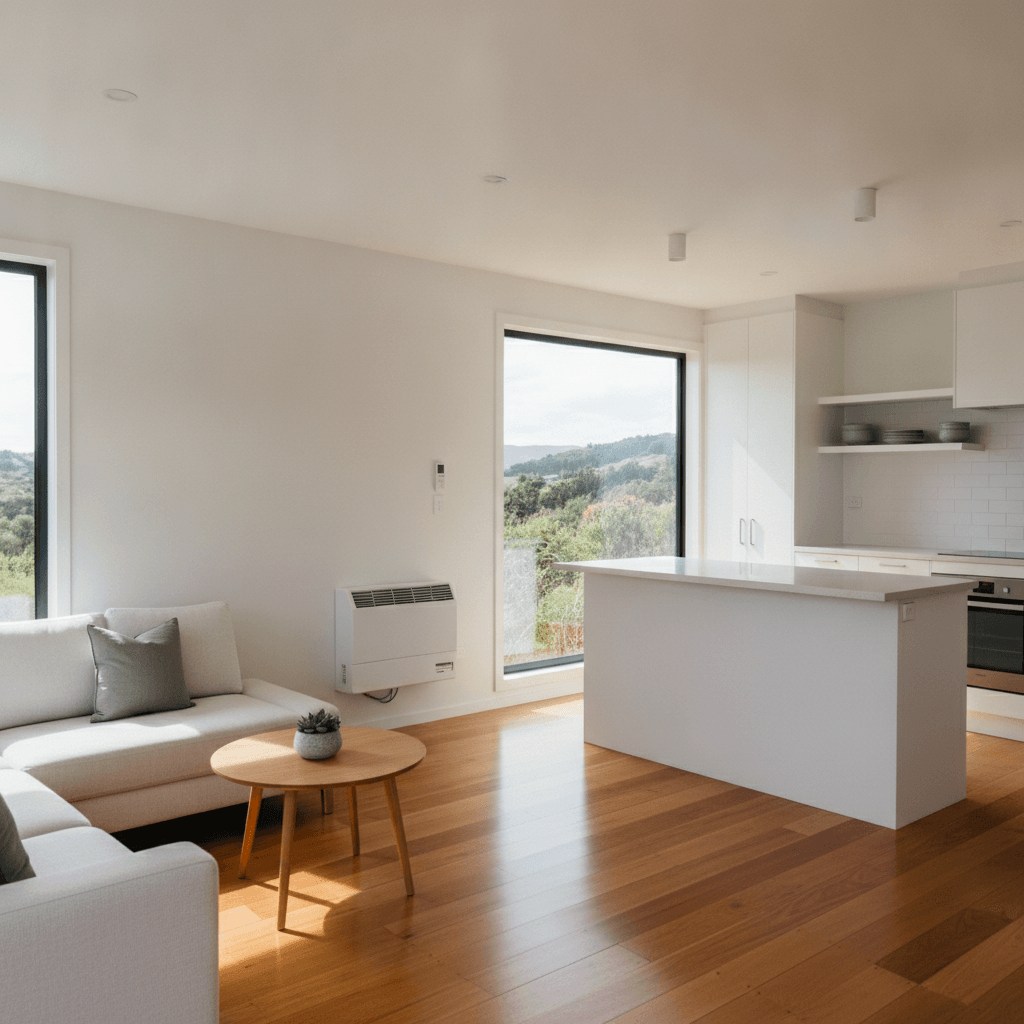
| Heating | A fixed heating device (typically a heat pump) capable of heating the main living area to 18°C |
| Insulation | Ceiling and underfloor insulation meeting current Building Code minimum R-values |
| Ventilation | Openable windows in all habitable rooms, rangehood in kitchen, extractor fan in bathroom |
| Moisture & Drainage | Functioning gutters, downpipes, and drainage. No pooling water under or around the dwelling |
| Draught Stopping | All external doors and windows sealed. No visible gaps to the outside |
In a compact 35–65m² dwelling, these factors are amplified. A small space with inadequate ventilation develops mould quickly. Poor insulation in a minor dwelling means disproportionately high heating costs for tenants — and tenants who leave.
The difference between a good builder and an average one here is whether Healthy Homes compliance is designed into the build from the start or bolted on as an afterthought. A builder experienced with rental dwellings will spec the right heat pump size for the floor area, position ventilation to manage moisture flow, and ensure insulation meets or exceeds the minimum — because retrofitting any of this later is expensive and disruptive.
7 Things to Look For in a Minor Dwelling Builder
Not every builder who can frame a house is the right fit for a rental minor dwelling. Here’s what to evaluate:
| # | Criteria | Why It Matters for Rental Returns |
|---|---|---|
| 1 | Licensed Building Practitioner (LBP) | Legally required for restricted building work. Without an LBP, your build can’t receive a CCC — and without a CCC, you can’t insure or legally rent it. |
| 2 | Residential Build Guarantee | A 10-year guarantee (such as the Halo Guarantee) protects against defects that could otherwise wipe out years of rental income in repair costs. |
| 3 | Minor Dwelling Experience | Building a self-contained 50m² dwelling is different from building a house. Compact builds require efficient services layout, smart space planning, and familiarity with council rules specific to secondary dwellings. |
| 4 | Council Consent Management | Minor dwelling consents involve district plan checks, site coverage calculations, and sometimes resource consent. A builder who handles this avoids costly delays. |
| 5 | Healthy Homes Awareness | Builds designed for rental must comply from day one. A builder who understands these standards saves you from expensive retrofitting before you can take on a tenant. |
| 6 | Transparent Quoting | Unexpected costs eat directly into your return. Fixed-price or detailed line-item quotes let you calculate your actual yield before committing. |
| 7 | Post-Handover Support | Defect liability periods and warranty processes matter. A builder who disappears after handover leaves you covering any issues that surface in the first tenancy. |

Questions to Ask Before You Sign
Before committing to a builder for your rental minor dwelling, ask these directly:
- “Have you built minor dwellings specifically intended for rental use?” — Experience with rental builds means they understand tenant wear patterns, compliance requirements, and durable material choices.
- “Will the completed build meet Healthy Homes Standards without modification?” — If the answer is anything other than yes, factor in the cost and time to bring it up to standard before your first tenant.
- “What residential guarantee do you provide, and what does it cover?” — A 10-year guarantee covering structural defects is the benchmark. Anything less is a risk on a long-term investment.
- “Do you manage council consents and building inspections?” — Consent delays are one of the biggest causes of budget blowouts and missed rental income timelines.
- “Can I visit a completed minor dwelling you’ve built?” — Seeing finished work tells you more than any sales pitch. Pay attention to finishes, layout efficiency, and overall build quality.
- “What documentation do I receive at handover?” — You should receive the CCC, producer statements, warranties, compliance certificates, and maintenance guides. These are essential for insurance and future resale.
Mistakes That Reduce Rental Returns
These are the decisions that look minor during the build but directly affect your bottom line as a landlord:
Skipping or Delaying Consent
An unconsented minor dwelling cannot be legally rented out. It also won’t be covered by landlord insurance and can trigger enforcement action from council. Any rental income earned from an unconsented dwelling is built on a liability, not an asset.
No Separate Entrance or Outdoor Space
Tenants pay more for a dwelling that feels like their own home, not a room attached to someone else’s. A dedicated entrance path, private outdoor area, and visual separation from the main house all contribute to higher weekly rent and longer tenancies.
Ignoring Ventilation in Small Spaces
A 40–50m² dwelling with a kitchen, bathroom, and laundry generates significant moisture. Without properly sized extraction and passive ventilation, you’ll be dealing with mould issues within the first year — and the maintenance and tenant complaints that come with it.
Choosing the Cheapest Quote
The lowest build price often means cheaper materials, less experienced tradespeople, and minimal project management. In a rental dwelling, this translates to higher maintenance costs, shorter material lifespan, and more frequent vacancy between tenants. The real cost of a build is what you spend over 10 years, not what you pay upfront.
Building Too Small
A one-bedroom dwelling suits some markets, but a two-bedroom layout significantly broadens your tenant pool and commands noticeably higher weekly rent. If your site allows it, the additional build area often pays for itself within the first few years of tenancy.
Why Choose Clearcut Building Solutions
Our minor dwelling building team in Wellington understands what it takes to deliver a rental-ready build that performs as an investment from day one.
- Halo 10-Year Residential Guarantee — Your build is protected against structural defects for a decade, giving you and your tenants confidence in the quality of the dwelling.
- Licensed Building Practitioners — Every Clearcut build is carried out by LBP-certified professionals, ensuring your dwelling receives its Code Compliance Certificate without issues.
- Full Consent Management — We handle building consent applications, district plan assessments, and council inspections so you’re not chasing paperwork while your build timeline slips.
- Healthy Homes Built In — Our minor dwellings are designed to meet Healthy Homes Standards as part of the build specification, not as an afterthought. Heating, ventilation, insulation, moisture control, and draught stopping are addressed in the design phase.
- 20+ Years in Wellington — We know the local council requirements, site conditions, and building challenges specific to the Wellington region.
Frequently Asked Questions
Does a rental minor dwelling need to meet Healthy Homes Standards?
Yes. Any residential rental property in New Zealand must comply with the Healthy Homes Standards, including minor dwellings. The standards cover heating, insulation, ventilation, moisture and drainage, and draught stopping. Non-compliance can result in penalties and makes you liable for any health issues your tenant experiences.
What kind of guarantee should a minor dwelling builder offer?
Look for a minimum 10-year residential build guarantee that covers structural defects. In New Zealand, the Halo 10-Year Residential Guarantee is one of the most recognised. This protects your investment if issues arise after handover that would otherwise require significant repair work.
Do I need separate insurance for a rental minor dwelling?
Yes. Your standard homeowner’s insurance typically won’t cover a separate rental dwelling on your property. You’ll need a landlord insurance policy that covers the minor dwelling specifically, including tenant damage, loss of rent, and liability. Most insurers require a valid CCC and building consent documentation before they’ll provide cover.
Is it better to build a one-bedroom or two-bedroom minor dwelling for rental?
A two-bedroom layout generally delivers better rental returns. It appeals to a wider tenant market — including couples, small families, and flatmates — and commands higher weekly rent. If your site coverage and district plan rules allow for the additional floor area, the two-bedroom option typically offers a stronger return over time.
What happens if I rent out a minor dwelling without building consent?
Renting an unconsented dwelling puts you at serious legal and financial risk. Your council can issue a notice to fix or order the dwelling to be removed. Landlord insurance won’t cover an unconsented structure. Your tenant can apply to the Tenancy Tribunal for compensation. And if you sell the property, the lack of consent will surface in the LIM report and affect the sale price.