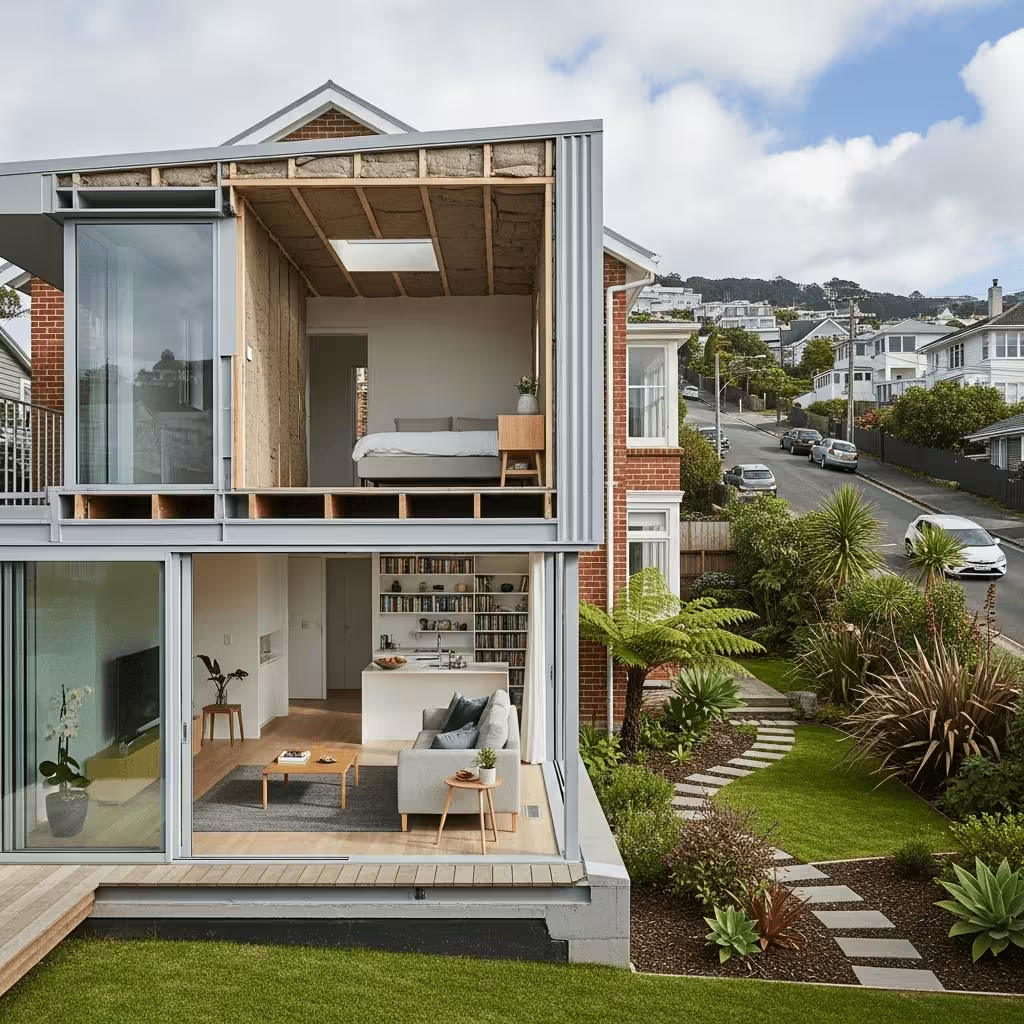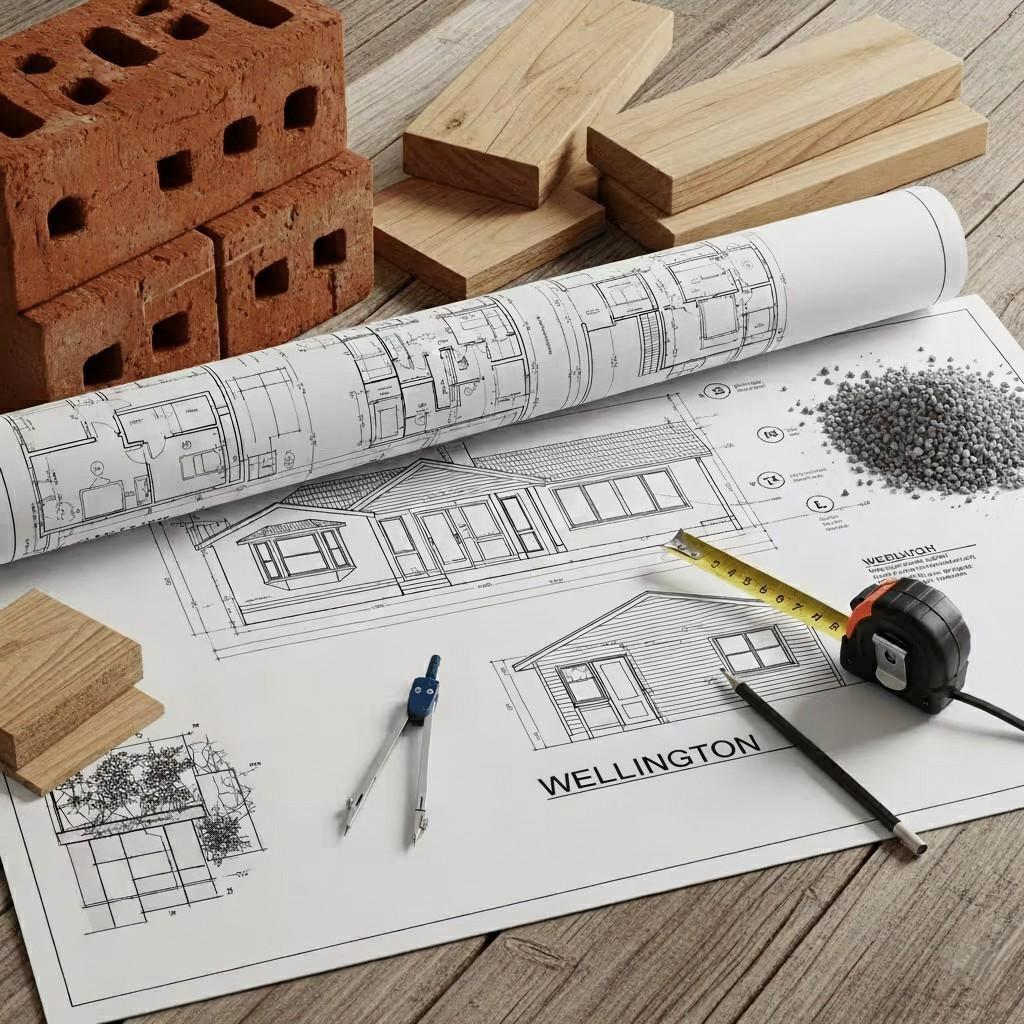
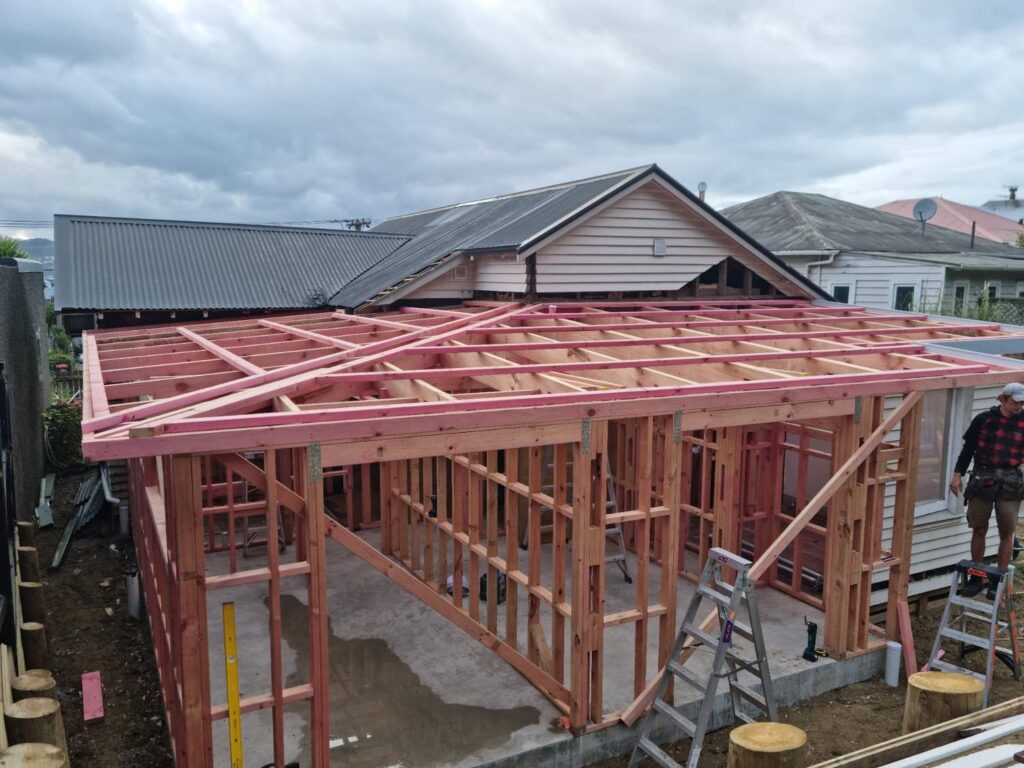
Quick Answer: Adding a second storey to your Wellington home lets you gain space without losing yard, but it requires structural assessment, building consent, and a builder experienced with Wellington’s wind zones and seismic requirements. This guide covers the key considerations before you commit to a second storey addition.
What’s in This Guide
- When Adding a Second Storey Makes Sense
- Structural Assessment: Can Your Home Support It?
- Council Consent and District Plan Rules
- Wellington-Specific Challenges
- Living in Your Home During the Build
- Choosing the Right Builder
- Why Choose Clearcut Building Solutions
- FAQs
When Adding a Second Storey Makes Sense
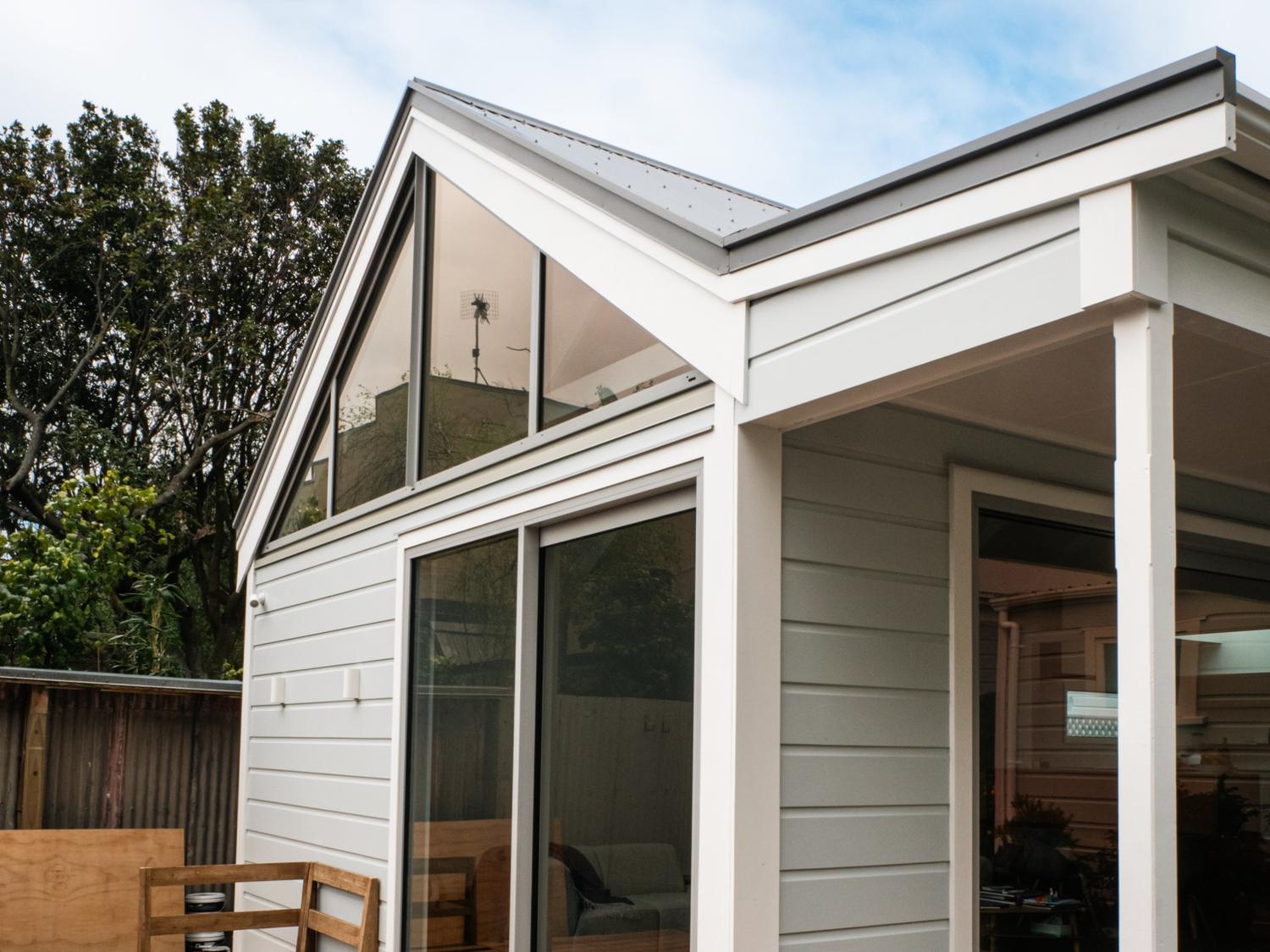
Not every home extension needs to go outward. A second storey addition is worth considering when:
- Your section is small or narrow: Wellington sections are often compact, particularly in suburbs like Thorndon, Mt Victoria, and Karori. Building up preserves outdoor space that a ground-floor extension would consume.
- Boundary setback rules limit ground-floor expansion: District plan setback requirements from side and rear boundaries can restrict how far you can extend at ground level. Going up may give you more usable floor area within the same building footprint.
- You want to capture views: Wellington’s topography means a second storey can open up harbour, hill, or city views that don’t exist at ground level.
- You want to keep living on-site: Depending on the build approach, it can be possible to continue living in the ground floor while the second storey is constructed above, though this depends on the scope of work.
A ground-floor extension is generally simpler and may suit homes where the section allows it and views aren’t a factor. The right option depends on your site, your home’s structure, and what you’re trying to achieve.
Structural Assessment: Can Your Home Support It?
This is the first question any engineer will answer before a second storey proceeds. Not every home can carry the additional load without foundation and framing upgrades.
| Assessment Area | What Gets Checked |
|---|---|
| Foundations | Whether existing foundations can handle the additional weight, or if underpinning or new piles are needed |
| Framing | Whether existing wall framing and load paths can transfer the new loads down to the foundations |
| Bracing | Whether the ground floor has adequate bracing for the increased lateral loads from wind and seismic forces |
| Roof removal | How the existing roof will be removed and the home kept weathertight during construction |
A structural engineer’s report is essential before any design work begins. Your builder and architect will use this to determine what’s feasible and what preparatory work the existing structure needs before the second storey can be built.
Older Wellington homes, particularly timber-framed villas and bungalows, often need foundation upgrades. This isn’t unusual and doesn’t rule out a second storey, but it needs to be factored into the project scope from the start.

Council Consent and District Plan Rules
A second storey addition will require building consent from your local council. In the Wellington region, the specific rules vary depending on which council your property falls under.
Height and recession plane rules
Every residential zone has maximum height limits and recession plane requirements. Recession planes control how tall a building can be relative to its distance from boundaries, preventing overshadowing of neighbouring properties. A second storey that works within the building footprint may still breach recession plane rules if it’s too close to a boundary.
Your architect or designer will model these rules early in the design process. If the proposed design breaches any district plan standards, a resource consent may be required in addition to the building consent.
Which council?
The Wellington region spans multiple councils, each with their own district plan:
- Wellington City Council: Covers Wellington City suburbs from Thorndon to Island Bay
- Hutt City Council: Covers Lower Hutt, Petone, Eastbourne, Wainuiomata
- Upper Hutt City Council: Covers Upper Hutt and surrounding areas
- Porirua City Council: Covers Porirua, Whitby, Papakowhai, Plimmerton
- Kāpiti Coast District Council: Covers Paraparaumu, Waikanae, Raumati
Height limits, setback distances, and recession plane angles differ between councils and between zones within the same council. A builder with experience across the region knows these variations and can flag potential consent issues before you’ve spent time and money on detailed design.
Consent timeframes
Building consent processing times vary. Simple consents can be processed within the statutory 20 working days, but second storey additions are rarely simple. If a resource consent is also required, expect the overall consent process to take longer. Your builder should be able to advise on typical timeframes for your specific council.
Wellington-Specific Challenges
Wellington’s environment creates specific engineering and construction challenges for second storey additions that don’t apply in other parts of the country.
Wind loading
Wellington sits in New Zealand’s highest wind zone. The Building Code requires structures in high wind zones to withstand significantly greater wind loads than those in lower zones. A second storey increases the surface area exposed to wind, which means the bracing, connections, and cladding systems all need to be designed accordingly. This affects material choices, fixing details, and structural design.
Seismic design
Wellington’s proximity to active fault lines means all building work must meet seismic design requirements. Adding a second storey changes the building’s seismic behaviour by raising its centre of mass. The structural engineer will design the addition to meet current earthquake standards, which may also mean strengthening the existing ground floor structure.
Weather during construction
Removing an existing roof to build a second storey exposes the ground floor to the elements. In Wellington, this requires careful staging and temporary weatherproofing. An experienced builder will plan the roof removal and new framing sequence to minimise the period the home is exposed, and will have contingency plans for Wellington’s unpredictable weather.
Hillside and access challenges
Many Wellington homes sit on sloping sites with limited access for machinery and materials. Crane access, scaffolding placement, and material storage all need to be planned around these constraints. Homes on narrow rights-of-way or steep driveways may require additional logistics planning.
Living in Your Home During the Build
Whether you can stay in your home during a second storey addition depends on the scope of work and how the build is staged.
In some cases, the ground floor remains largely intact and liveable while the new level is constructed above. The main disruption comes during roof removal and when services (plumbing, electrical) are connected between floors.
In other cases, particularly where the ground floor layout is also being reconfigured, temporary relocation is more practical. Your builder should be upfront about what’s realistic for your specific project.
Factors that affect whether you can stay include:
- Whether the existing roof can be removed in stages or needs to come off entirely
- How long the home will be without a weathertight roof
- Whether ground floor services need to be disconnected during the work
- Health and safety requirements around living on an active construction site
Choosing the Right Builder
Second storey additions are more complex than standard renovations or ground-floor extensions. The builder you choose should have specific experience with this type of work, not just general renovation experience.
Key things to look for:
- Licensed Building Practitioner (LBP) status: Required for restricted building work, which includes structural elements of a second storey addition
- Experience with second storey projects: Ask to see completed examples and speak to previous clients
- Structural engineering relationships: A builder who works regularly with structural engineers will manage the design and consent process more efficiently
- Wellington experience: Familiarity with local wind zones, seismic requirements, council processes, and site access challenges
- Weathertight management: Ask how they manage the period when the existing roof is removed
For a broader guide on evaluating builders, read our post on how to choose the best builders in Wellington.
Why Choose Clearcut Building Solutions
Clearcut Building Solutions has completed second storey additions and home extensions across the Wellington region, from compact Wellington City sites through to suburban sections in Lower Hutt and Porirua.
- NZ Certified Builders Member: Independently vetted to meet ongoing industry standards
- Halo 10-Year Guarantee: Your project is protected by a third-party guarantee managed by independent assessors
- Licensed Building Practitioners: Every project supervised by LBP-licensed builders
- Wellington-focused: We work exclusively in the Wellington region and understand the local conditions, councils, and site challenges
Browse our completed projects to see examples of our work across the region.
Frequently Asked Questions
Do I need building consent for a second storey addition in Wellington?
Yes. A second storey addition involves structural work and is classified as restricted building work under the Building Act. You will need building consent, and may also need resource consent if the design breaches district plan rules such as height limits or recession planes.
Can my home support a second storey?
This depends on the existing foundations and framing. A structural engineer’s assessment is the first step. Many Wellington homes, including older timber-framed villas, can support a second storey with appropriate foundation and framing upgrades.
Can I live in my home during a second storey addition?
In some cases, yes. It depends on how the build is staged, how long the roof is removed, and whether ground floor services are affected. Your builder should advise on what’s realistic for your specific project early in the planning process.
How does Wellington’s wind affect a second storey addition?
Wellington is in New Zealand’s highest wind zone. A second storey increases the building’s exposure to wind, requiring stronger bracing, connections, and cladding systems. Your structural engineer will design for these loads as part of the consent documentation.
Is it better to build up or build out?
It depends on your site, your home’s structure, and what you want to achieve. Building up preserves yard space and can capture views, but requires structural upgrades to the existing home. Building out is generally simpler but uses more of your section. Your builder and designer can help you weigh up the options for your specific situation.
What qualifications should a builder have for a second storey addition?
At minimum, the builder should be a Licensed Building Practitioner (LBP), as second storey work involves restricted building work. Look for NZ Certified Builders membership and specific experience with second storey projects in Wellington.