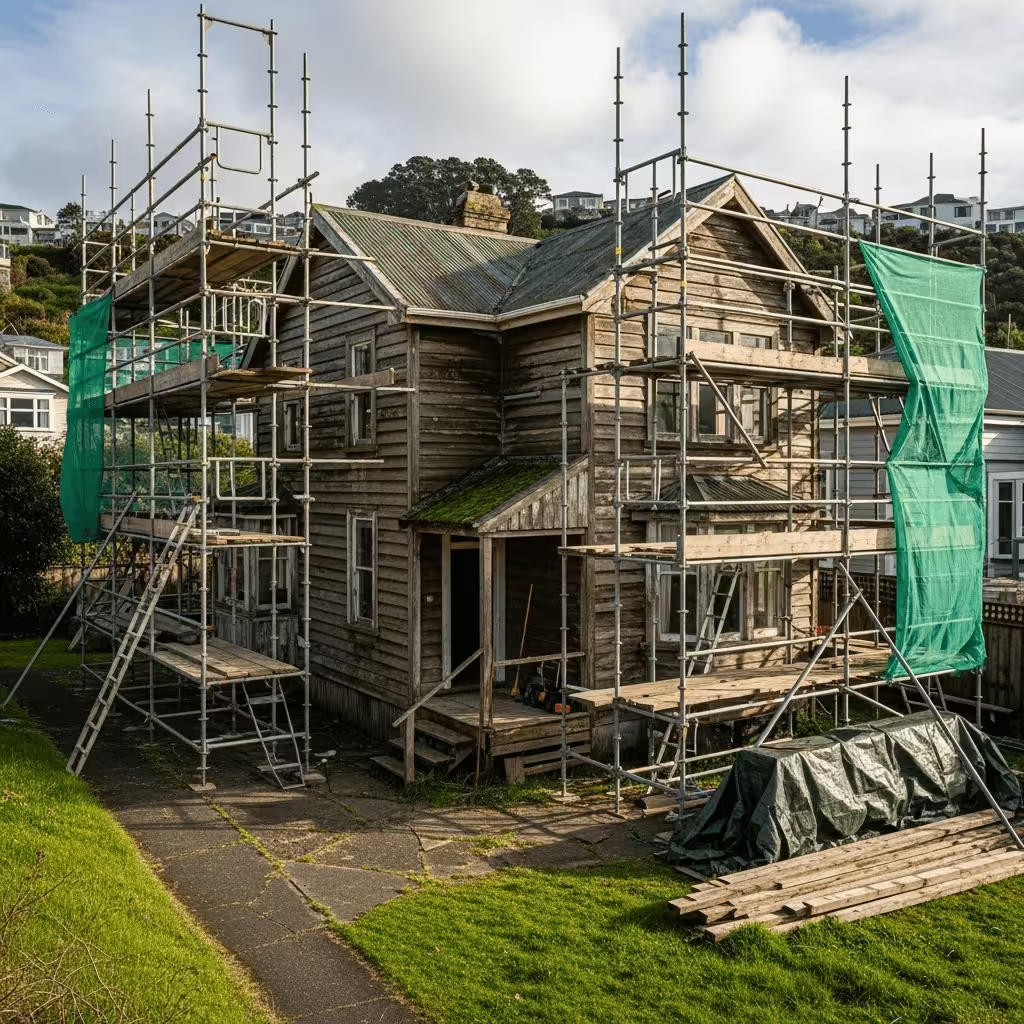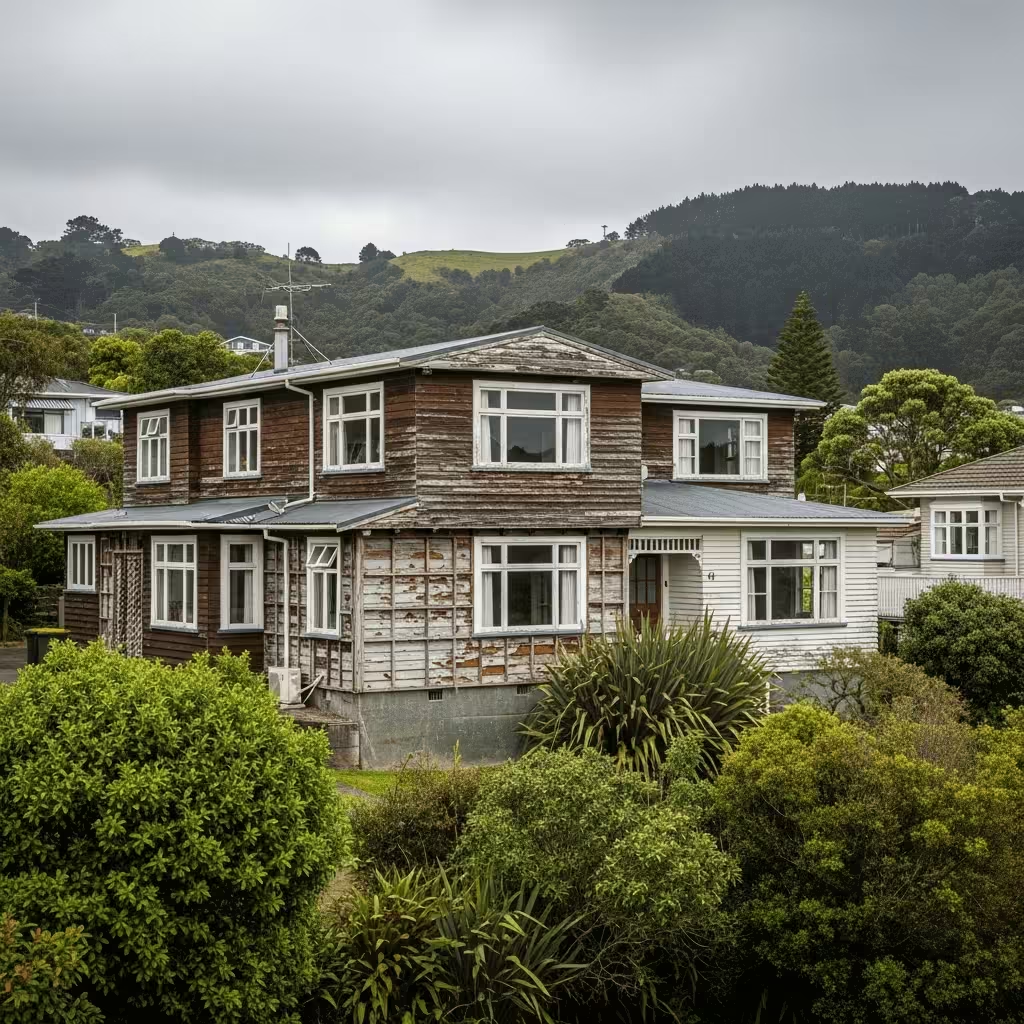
Quick Answer: The most common Rockcote cladding problems in New Zealand include hairline and structural cracking, moisture ingress through failed sealant joints, delamination of the plaster coating, and weathertightness failures — particularly in homes built between the mid-1990s and 2004 without drained cavities. Repair costs range from $15,000–$60,000 for targeted fixes, while a full reclad typically costs $200,000–$500,000+.
What’s in This Guide
- What Is Rockcote Cladding?
- Common Rockcote Cladding Problems in NZ
- How to Tell If Your Rockcote Cladding Has Problems
- Repair vs Full Reclad: Costs Compared
- NZ Building Code Requirements
- Why Choose Clearcut for Cladding Remediation
- Frequently Asked Questions
What Is Rockcote Cladding?
Rockcote is a brand of exterior plaster cladding system widely used across New Zealand. Part of the Resene Construction Systems range, Rockcote systems include several product lines such as the EPS Cavity Plus Insulated Facade System, direct-fix render systems, and masonry overlay systems.
These monolithic cladding systems create a seamless, rendered finish over substrates like polystyrene (EPS), fibre cement, or concrete block. While modern Rockcote systems incorporate cavity drainage and meet current building code requirements, many older installations — particularly from the 1990s to mid-2000s — were direct-fixed without adequate drainage, leading to the weathertightness issues NZ homeowners know all too well.
Common Rockcote Cladding Problems in NZ
Rockcote cladding problems typically fall into five categories. Understanding these issues helps Wellington homeowners identify potential failures early, before they become structural.
1. Cracking
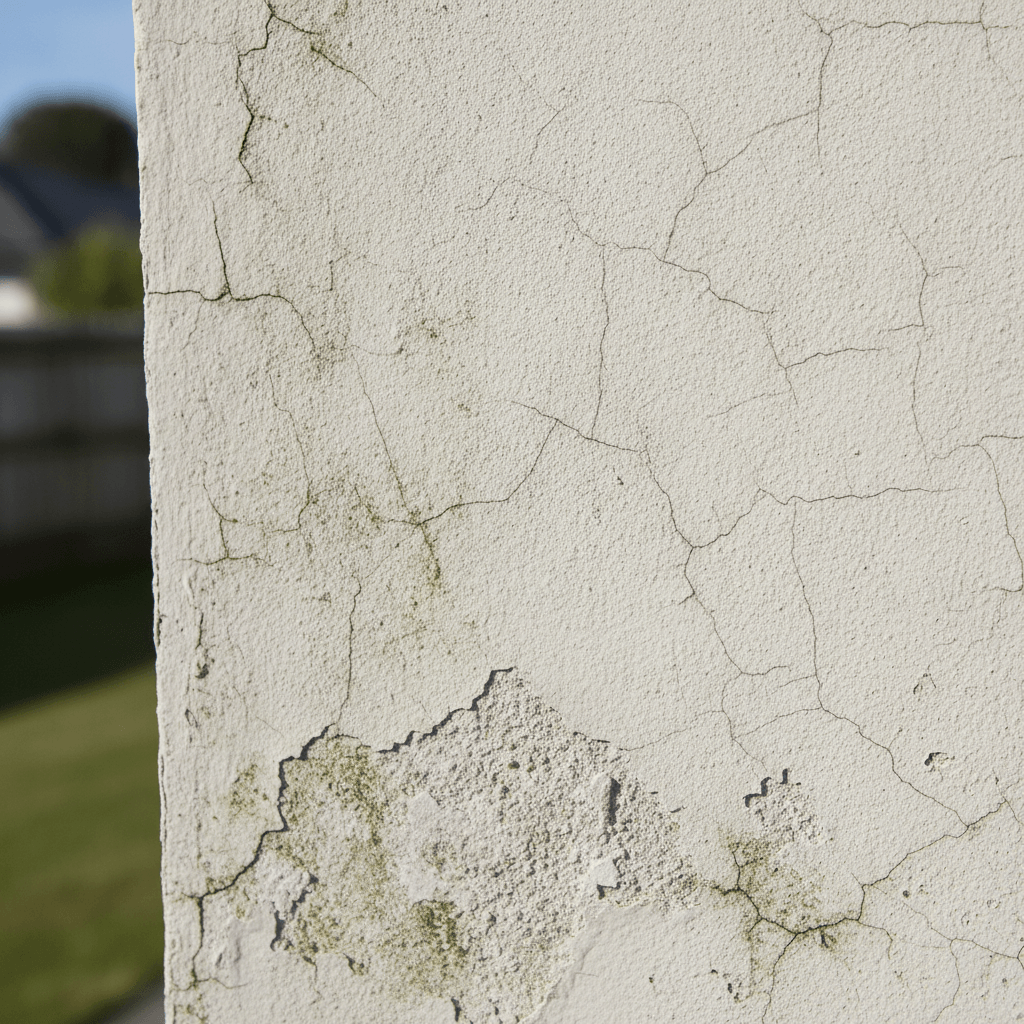
Cracking is the most visible Rockcote cladding problem. Hairline cracks may appear harmless but can allow moisture to penetrate the plaster coating and reach the framing behind. In Wellington, seismic movement and high wind loads put additional stress on rigid plaster systems, making cracking more common than in calmer regions.
Common crack types include:
- Hairline cracks — Surface-level, often caused by thermal expansion and contraction
- Structural cracks — Deeper cracks around windows, doors, and wall junctions indicating substrate movement
- Map cracking — A network of fine cracks across larger areas, often from incorrect application thickness
2. Moisture Ingress
Moisture ingress is the most damaging problem with Rockcote and other monolithic cladding systems. When water enters through cracks, failed sealant joints, or poorly flashed penetrations, it becomes trapped between the cladding and the building wrap. Without a drained cavity, this moisture soaks into timber framing — causing rot, mould, and structural degradation.
Wellington’s driving rain and high humidity make moisture ingress a particular concern. Homes on exposed hillsides face even greater risk due to wind-driven rain pressure.
3. Delamination
Delamination occurs when the Rockcote plaster coating separates from its substrate. This creates hollow-sounding areas when tapped and can lead to sections of render falling away entirely. Causes include:
- Moisture behind the coating breaking the adhesive bond
- Incorrect surface preparation during installation
- UV degradation over time weakening the coating system
- Freeze-thaw cycles in exposed locations
4. Sealant and Joint Failure
Every penetration through a Rockcote cladding system — windows, doors, vents, pipes — relies on sealant joints to maintain weathertightness. These sealants have a finite lifespan (typically 10–15 years) and will eventually crack, shrink, or pull away from the substrate. Failed sealant joints are one of the primary entry points for moisture.
5. Coating Degradation
The acrylic texture finish on Rockcote systems protects the underlying plaster from UV and weather damage. Over time, this coating can chalk, fade, or become porous — reducing its water-repellent properties. Wellington’s strong UV exposure and salt-laden coastal winds accelerate this degradation.
How to Tell If Your Rockcote Cladding Has Problems
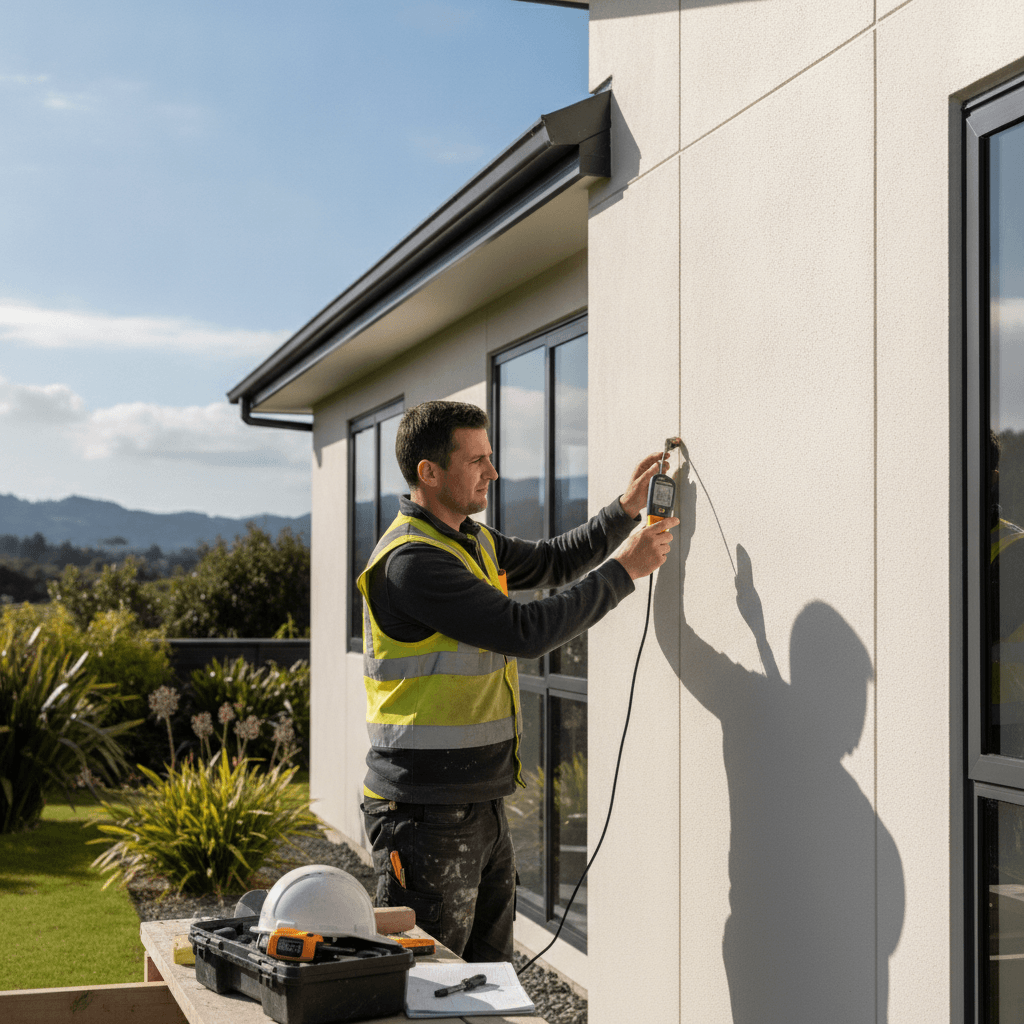
Early detection of Rockcote cladding problems can save homeowners tens of thousands of dollars. Here are the warning signs to watch for:
| Warning Sign | What It Means | Urgency |
|---|---|---|
| Visible cracks in render | Potential moisture entry point | Medium — monitor and seal |
| Hollow sounds when tapping walls | Delamination — coating separating from substrate | High — investigate immediately |
| Musty smell inside | Moisture trapped in wall cavity causing mould | High — health risk |
| Swollen skirting or window sills | Water damage to internal framing | High — structural concern |
| Staining or discolouration on walls | Water tracking behind cladding | Medium-High |
| Gaps around window/door frames | Sealant failure allowing water entry | Medium — reseal promptly |
| Chalky or powdery surface | Coating degradation reducing protection | Low-Medium — maintenance needed |
When to Get a Professional Inspection
If you notice any of the high-urgency signs above, arrange a weathertight investigation. A thorough inspection by a qualified assessor costs $2,500–$5,000 and includes invasive moisture testing at high-risk junctions (window heads, deck-to-wall junctions, roof-to-wall intersections) and a written report with recommendations.
We recommend inspections for any Rockcote-clad home that is:
- More than 15 years old
- Direct-fixed (no cavity behind the cladding)
- Showing any visible cracks or sealant deterioration
- Located in a high-exposure zone (coastal, hilltop, or heavy rainfall area)
Rockcote Repair vs Full Reclad: Costs Compared
The biggest decision for homeowners with Rockcote cladding problems is whether to repair or fully reclad. Here’s how the costs and outcomes compare:
| Option | Cost Range | When It’s Appropriate |
|---|---|---|
| Cosmetic repairs (crack filling, recoating) | $3,000–$10,000 | Surface cracks only, no moisture issues detected |
| Targeted repair (localised areas) | $15,000–$60,000 | Moisture isolated to 1–2 junctions, framing mostly sound |
| Partial reclad (worst-affected elevations) | $80,000–$180,000 | Damage concentrated on 1–2 sides of the home |
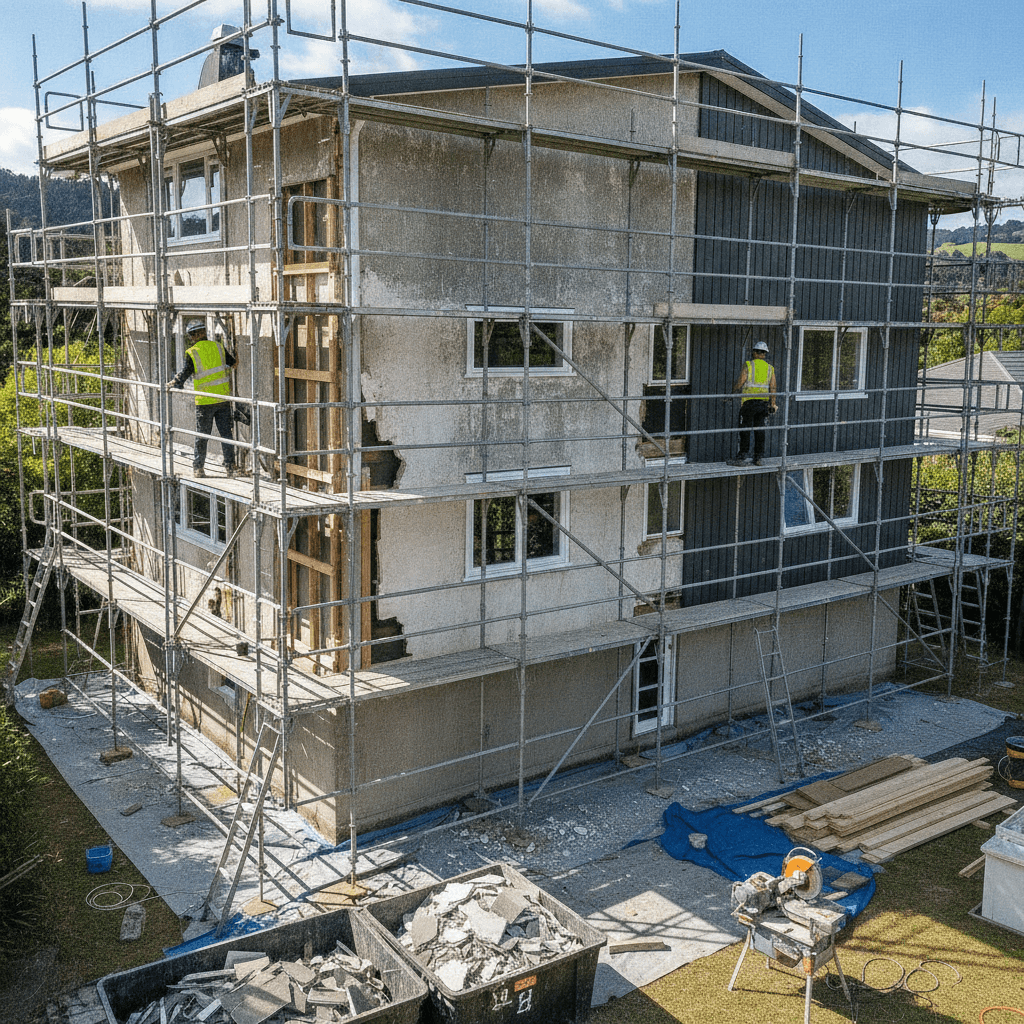
| Full reclad | $200,000–$500,000+ | Widespread moisture damage, structural timber replacement needed |
| Weathertight investigation | $2,500–$5,000 | First step — always do this before committing to repairs |
Key Factors in the Repair vs Reclad Decision
A targeted repair is only viable when moisture damage is limited and the structural framing is sound. Full recladding makes more sense when:
- Multiple junctions show elevated moisture readings
- The cladding is direct-fixed without a cavity (pre-2005 installations)
- Framing timber shows signs of rot in more than one location
- You plan to sell — buyers and banks are increasingly wary of monolithic homes without remediation certificates
NZ Building Code Requirements for Rockcote Cladding
New Zealand’s building code has evolved significantly since the leaky building crisis. Key requirements that affect Rockcote cladding systems include:
E2 External Moisture
Building Code clause E2 requires that buildings be constructed to prevent external moisture from causing undue dampness, damage to building elements, or conditions that are dangerous to health. For cladding systems, this means:
- All wall claddings on timber-framed buildings up to 10m must include a drained and vented cavity (minimum 20mm) under E2/AS1 Fourth Edition
- Proprietary systems (like modern Rockcote EPS Cavity Plus) may use alternative solutions but must demonstrate compliance
- Flashings, sealants, and junctions must be designed to manage moisture
Modern Rockcote Systems
Current Rockcote EPS Cavity Plus systems incorporate a 20mm drainage cavity and are rated for all NZ wind zones up to 2.5kPa design differential. They carry a 15-year product warranty with an expected durability of 30 years (as assessed by BRANZ). However, these modern systems must be installed by PPCS-registered plasterers licensed to apply Rockcote exterior render systems.
Older Installations
If your home has a direct-fixed Rockcote system (no cavity), it was likely installed under older building code provisions. While not necessarily non-compliant at the time of construction, these systems don’t meet current best practice and are at higher risk of moisture problems.
Why Choose Clearcut for Cladding Remediation
Dealing with Rockcote cladding problems requires a builder who understands both the technical requirements of weathertight remediation and the building consent process. Our recladding services in Wellington cover the full scope — from initial investigation through to completed reclad with code compliance certificate.
As Licensed Building Practitioners and NZ Certified Builders, we bring:
- Full weathertight assessment coordination — We work with qualified assessors to identify the extent of damage before quoting
- Consent management — Recladding typically requires building consent; we handle the application process
- Structural repair capability — If framing replacement is needed, our team handles it in-house
- 10-year Halo Residential Guarantee — All our work is backed by independent guarantee for your peace of mind
Frequently Asked Questions
How long does Rockcote cladding last in NZ?
Modern Rockcote EPS Cavity Plus systems have an expected durability of 30 years when correctly installed and maintained. However, the acrylic texture coating typically needs recoating every 10–15 years, and sealant joints should be inspected and replaced on a similar cycle. Older direct-fix installations may have a shorter effective lifespan due to moisture-related issues.
Is Rockcote cladding the same as monolithic cladding?
Rockcote is a brand of monolithic cladding. Monolithic cladding is the broader category that includes all seamless, rigid exterior wall systems — plaster over polystyrene (EIFS), plaster over fibre cement, and stucco over concrete block. Rockcote (manufactured by Resene Construction Systems) is one of several monolithic cladding products available in NZ.
Can I get a mortgage on a house with Rockcote cladding?
It depends on the system and its condition. Banks and insurers are increasingly cautious about monolithic-clad homes. A pre-purchase weathertight inspection and a report showing either no issues or completed remediation will significantly improve your chances of securing finance. Some lenders require a minimum 30% deposit for monolithic homes without remediation certificates.
Should I repair or reclad my Rockcote home?
Start with a professional weathertight investigation ($2,500–$5,000). If moisture damage is isolated to one or two junctions and the framing is sound, targeted repair ($15,000–$60,000) may be sufficient. If damage is widespread or the system is direct-fixed without a cavity, a full reclad ($200,000–$500,000+) is usually the better long-term investment.
What are the alternatives to Rockcote when recladding?
Popular alternatives include weatherboard (timber or fibre cement), brick veneer, Linea or Stria fibre cement panels, and modern cavity-based plaster systems. The best choice depends on your budget, aesthetic preferences, and the specific wind and exposure conditions of your site. All modern options must include a drained and vented cavity over treated timber framing.