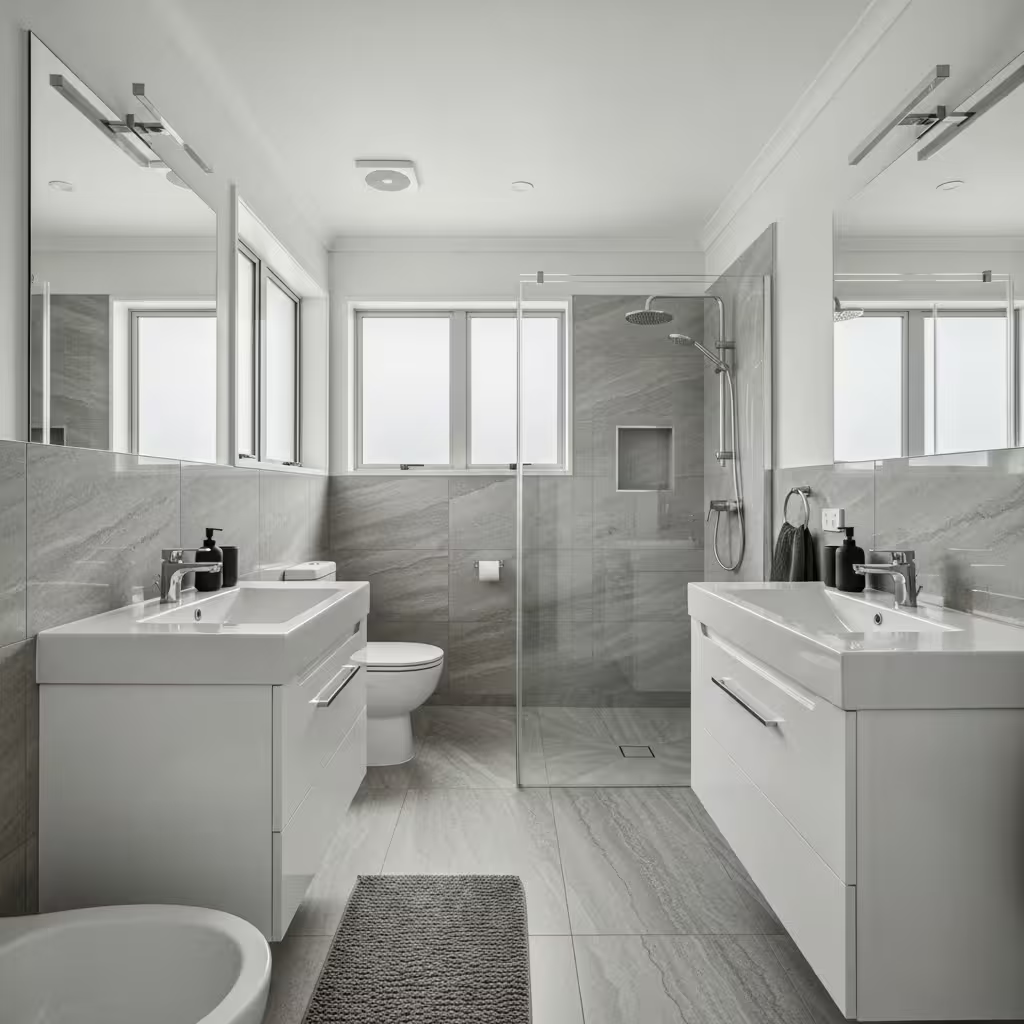
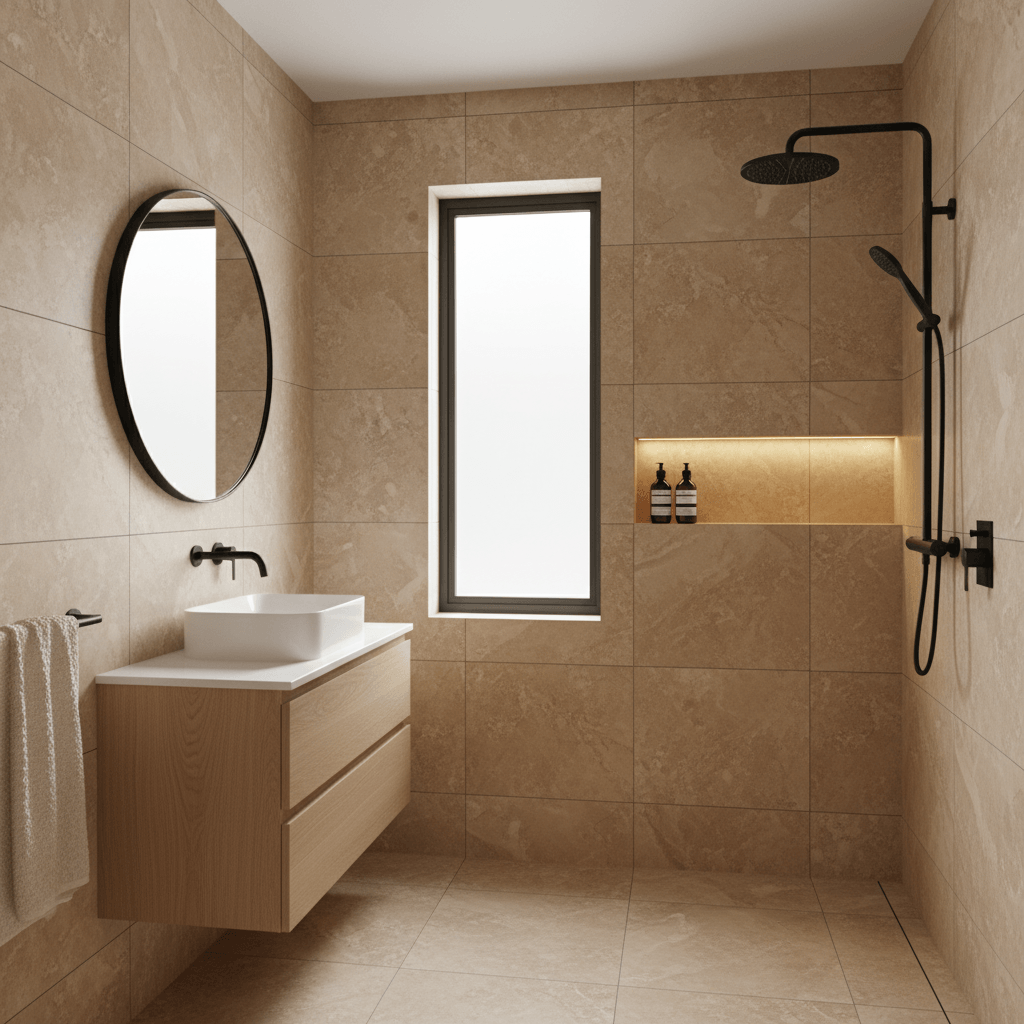
Quick Answer: The best small bathroom renovation ideas for Wellington homes include wet room conversions, wall-hung vanities and toilets, shower-over-bath combos, recessed niches, and large-format tiles. Wellington villa bathrooms are typically 2-3 sqm, so smart layout changes and space-saving fixtures make the biggest difference. Expect to invest $23,000-$35,000 for a mid-range full renovation.
What’s in This Guide
- Smart Layouts for Wellington Villa Bathrooms
- Space-Saving Ideas That Actually Work
- Materials and Design Trends for 2026
- What Small Bathroom Renovations Cost in Wellington
- Do You Need Building Consent?
- Why Choose Clearcut Building Solutions
- Frequently Asked Questions
Smart Layouts for Wellington Villa Bathrooms
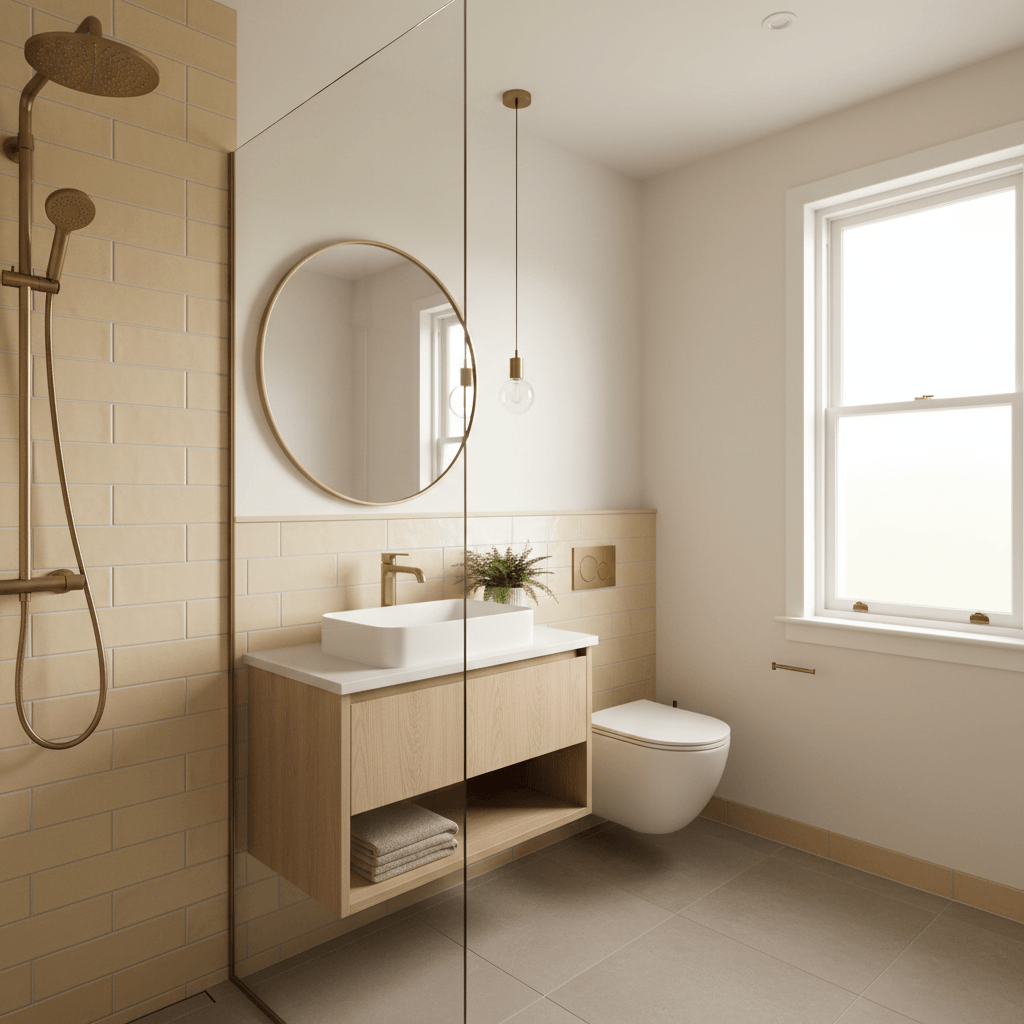
Wellington’s housing stock is heavily weighted toward pre-1940s villas and bungalows, and the bathrooms in these homes are often the most challenging rooms to renovate. Original villa bathrooms were typically shoehorned into former back porches or lean-tos, leaving you with narrow, awkwardly shaped spaces of just 2-3 square metres.
The good news? These tight layouts actually offer some of the biggest renovation opportunities. Here are the layout changes that make the most impact in Wellington character homes:
Combine the Toilet and Bathroom
Many Wellington villas have a separate toilet compartment next to the bathroom. Removing the dividing wall between them is one of the most effective ways to create a functional, modern bathroom. You gain enough floor space to fit a proper shower, vanity, and toilet in a layout that actually flows.
Reclaim Wasted Hallway Space
Some villas have underutilised hallway cupboards or service corridors directly adjacent to the bathroom. Borrowing even 300-400mm from these spaces can transform a cramped bathroom into one that feels genuinely comfortable.
Flip the Layout
If your current bathroom places the shower at the far end and the door swing eats into the floor space, consider repositioning fixtures to work with the room’s proportions rather than against them. Moving the shower to the window end (where ventilation is best) and placing the vanity near the door often makes better use of a narrow villa bathroom.
Space-Saving Ideas That Actually Work
Wet Room Conversions
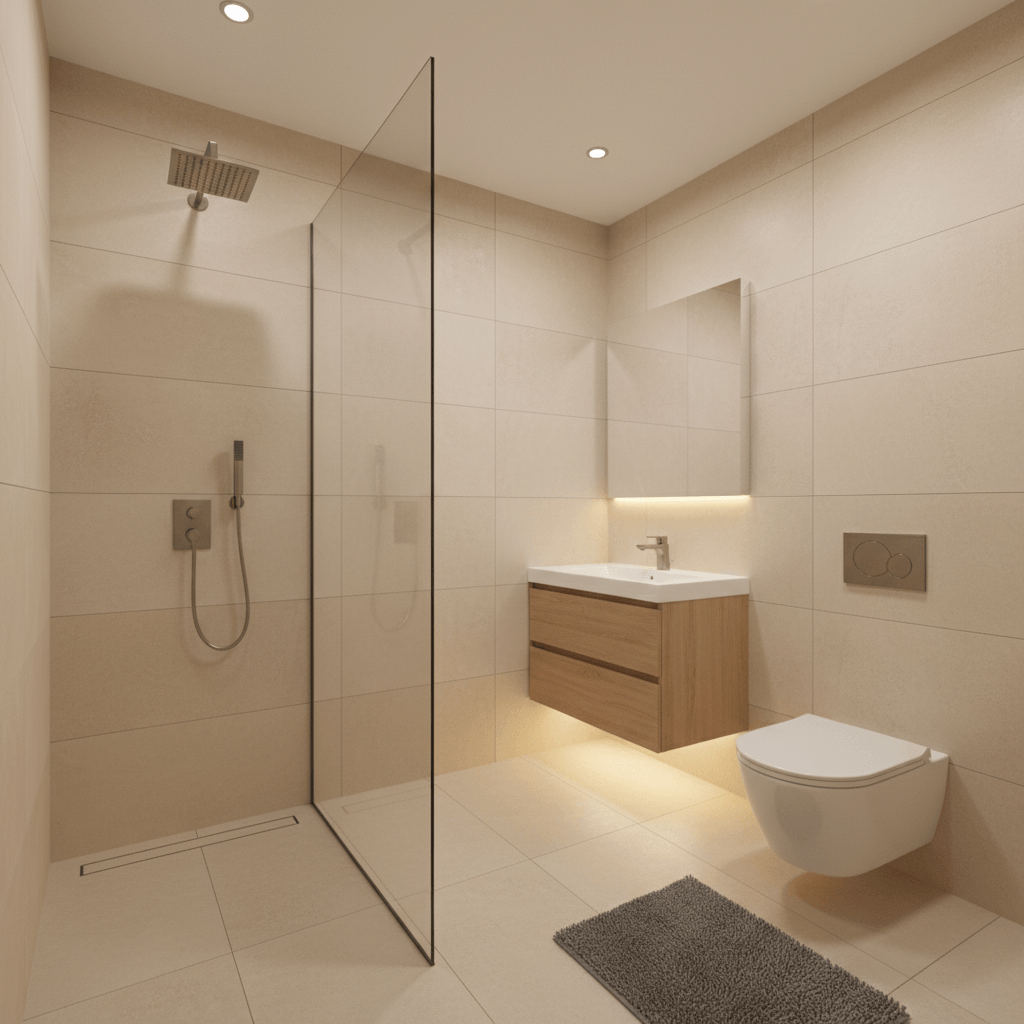
For very small bathrooms under 3 sqm, a wet room conversion is the most effective way to maximise space. The entire floor is waterproofed and graded to a single drain, eliminating the need for a separate shower enclosure. A single fixed glass panel can define the shower zone without fully enclosing it, keeping heat contained while maintaining an open feel.
Wet rooms are particularly well-suited to narrow villa bathrooms where a traditional shower cubicle would dominate the room. They also look premium and are easier to clean. Building consent is required for wet room conversions due to the waterproofing membrane and drainage changes.
Wall-Hung Vanities and Toilets
Floating vanities mounted to the wall with clear space underneath create a genuine illusion of more floor space. Paired with a wall-hung toilet (where the cistern sits concealed behind the wall), you can free up 150-200mm of floor depth that makes a real difference in a small room.
One thing to be aware of in older Wellington homes: villa walls are typically 100mm stud framing, which can be too thin for in-wall cisterns. Your builder may need to fur out the wall slightly to accommodate the concealed system. NZ brands like Clearlite, Athena, and St Michel all offer wall-hung vanity options designed for New Zealand bathrooms.
Shower-Over-Bath Combos
If your household needs both a bath and shower but space only allows one, a shower-over-bath combo is the practical solution. A fixed glass panel or bi-fold screen keeps water contained while maintaining an open feel. This works especially well in family homes where young children need a bath but adults prefer a shower.
Recessed Niches and Shelving
Built-in niches in shower walls eliminate the need for hanging caddies and protruding shelves. They can be illuminated with LED strips for a premium look, and they sit completely flush with the wall so they never eat into your floor space. Recessed niches beside the vanity mirror or behind the toilet are also effective for storing everyday items without visible clutter.
Cavity Sliding Doors
A standard hinged door needs 700-800mm of clear floor space to swing open. In a small bathroom, that is a significant amount of usable area lost. A cavity sliding door slides into the wall, freeing up the full room footprint. This is particularly effective for villa bathrooms accessed from narrow hallways.
Large Mirrors
A full-wall mirror above the vanity visually doubles the room size and bounces natural light around the space. Position it opposite a window for maximum effect. Backlit LED mirrors add a modern touch and provide even, shadow-free lighting for the vanity area.
Materials and Design Trends for 2026
Tiles
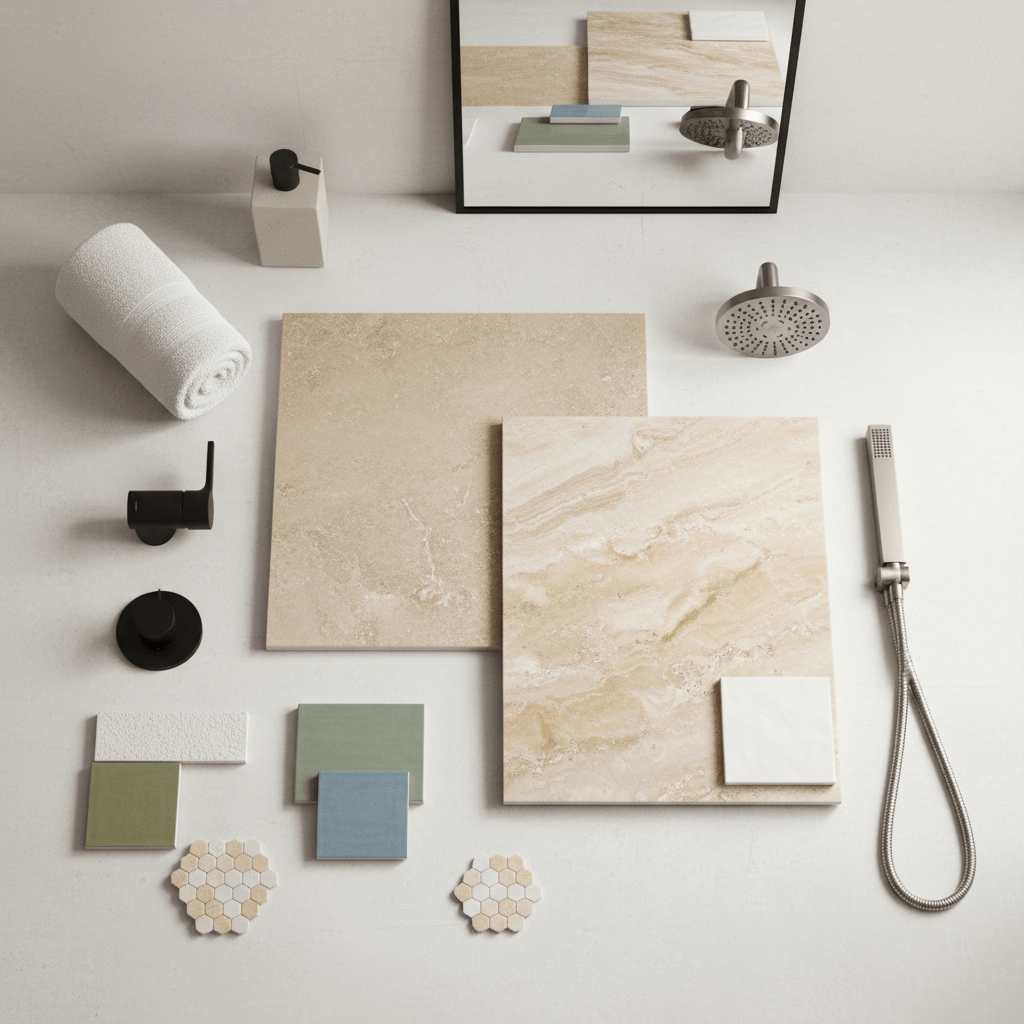
Large-format porcelain tiles (600x600mm or 600x1200mm) are the top choice for small bathrooms because fewer grout lines make the space feel bigger and are easier to clean. For 2026, the cool greys that dominated recent years are giving way to warmer tones. Think sandy beiges, warm whites, and travertine or limestone-look porcelain.
Matte white subway tiles with dark grout remain a timeless option for Wellington homes. For anti-slip properties in wet areas, textured matte porcelain is both practical and on-trend.
Tapware and Fixtures
Matte black tapware remains the dominant choice across New Zealand, but brushed nickel and gunmetal finishes are gaining ground in 2026. For Wellington’s damp, salt-laden coastal climate, stainless steel or PVD-finished tapware is worth the investment as it resists corrosion far better than standard chrome. Methven, New Zealand’s iconic tapware brand, offers a wide range in all these finishes.
Design Direction
The big shift for 2026 is toward softer, warmer aesthetics. Curved elements are replacing hard lines, from rounded vanity edges to arched shower screens and oval mirrors. Textured surfaces like ribbed cabinetry, fluted glass, and plaster-effect wall finishes add visual interest without taking up space. Sage green, deep navy, and terracotta work well as accent colours against warm neutral backgrounds.
What Small Bathroom Renovations Cost in Wellington
For a detailed breakdown, check out our Wellington bathroom renovation cost guide. Here is a quick summary for small bathrooms:
| Renovation Level | Cost Range | What’s Included |
|---|---|---|
| Cosmetic Refresh | $8,000 – $15,000 | New vanity, toilet, paint, vinyl flooring, updated fixtures |
| Mid-Range Full Renovation | $23,000 – $35,000 | Full strip-out, tiling, new shower/bath, vanity, toilet, plumbing and electrical |
| High-End / Premium | $40,000 – $70,000+ | Custom design, premium materials, underfloor heating, smart fixtures |
Wellington tip: Older villa homes often reveal rotten joists, outdated wiring, or asbestos once demolition starts. Always budget a 10-15% contingency for unexpected discoveries behind the walls.
Do You Need Building Consent?
This catches many Wellington homeowners off guard. We have a full guide on bathroom renovation consent requirements, but here is the quick version:
You DO need consent for:
- Installing a fully tiled shower (the waterproofing membrane must be inspected)
- Wet room conversions
- Moving fixtures to new positions that require new plumbing runs
- Structural changes like removing walls
- Adding new drains or sanitary fittings
You DON’T need consent for:
- Like-for-like replacement of vanity, toilet, or tapware
- Replacing a bath with a prefabricated shower unit (same position)
- Cosmetic updates like painting, new flooring, or new mirrors
The tiled shower rule is the one that trips people up most often. Many homeowners unknowingly complete non-consented tiled shower installations, which can cause serious problems when it comes time to sell. Getting it right from the start protects both your investment and your home’s resale value.
Why Choose Clearcut Building Solutions
Our bathroom renovation service in Wellington is built around the unique challenges of renovating small bathrooms in character homes. We have decades of experience working in Wellington villas and bungalows, so we understand the structural surprises, the plumbing quirks, and the layout opportunities that come with these homes.
We handle every aspect of the renovation, from initial design and council consent through to plumbing, electrical, tiling, and finishing. Our team coordinates all trades under one roof, so you have a single point of contact throughout the project. Every bathroom renovation comes with clear communication at each stage, a detailed scope of work with no hidden costs, and the quality guarantee you would expect from Licensed Building Practitioners.
Frequently Asked Questions
What is the best layout for a small bathroom in a Wellington villa?
Combining the separate toilet with the adjacent bathroom is usually the single most effective change. This gives you enough space for a proper shower, vanity, and toilet in a layout that works. From there, wall-hung fixtures and a wet room or walk-in shower make the most of the available floor area.
How long does a small bathroom renovation take?
A cosmetic refresh takes 2-3 weeks. A full renovation including strip-out, re-plumbing, waterproofing, tiling, and fitting takes 4-6 weeks. If building consent is required, add 2-4 weeks for processing before work can start.
Can I make my small bathroom look bigger without major structural changes?
Yes. Large-format tiles with minimal grout lines, a full-wall mirror, wall-hung vanity, light colour palette, and good lighting all make a small bathroom feel significantly more spacious without moving any walls.
What are the most common mistakes in small bathroom renovations?
Choosing fixtures that are too large for the space, skipping mechanical ventilation, not budgeting a contingency for hidden damage in older homes, and installing a tiled shower without building consent. Each of these can be avoided with proper planning and an experienced builder.
Is a wet room a good idea for a small bathroom?
Wet rooms are one of the best solutions for bathrooms under 3 sqm. They eliminate the need for a separate shower enclosure, making the entire room feel larger. They require proper waterproofing and building consent, but the result is a premium-feeling, easy-to-clean bathroom that maximises every square centimetre.
Should I choose a bath or shower for a small bathroom?
If space only allows one, a walk-in shower is the more practical choice for everyday use. If you need both, a shower-over-bath combo gives you the best of both worlds without doubling the footprint. Freestanding baths are generally not suited to small bathrooms.