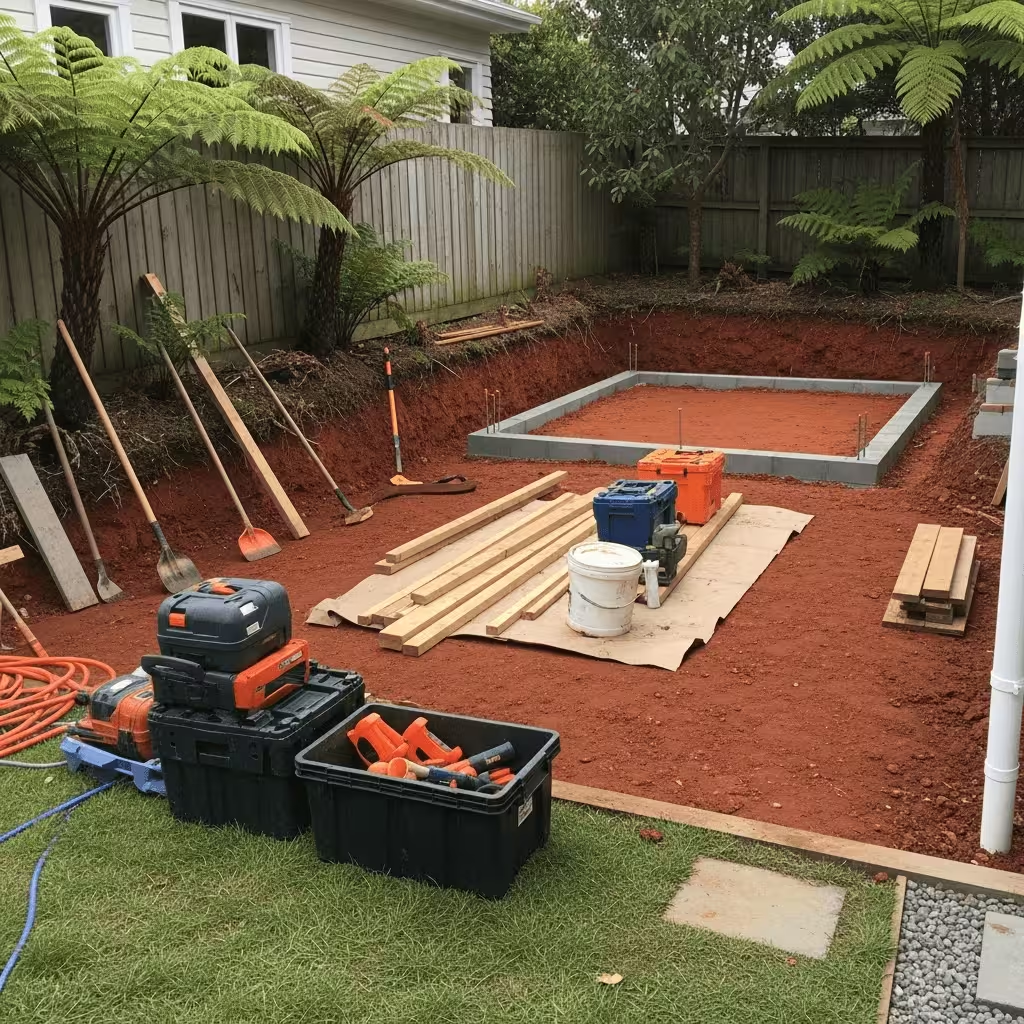
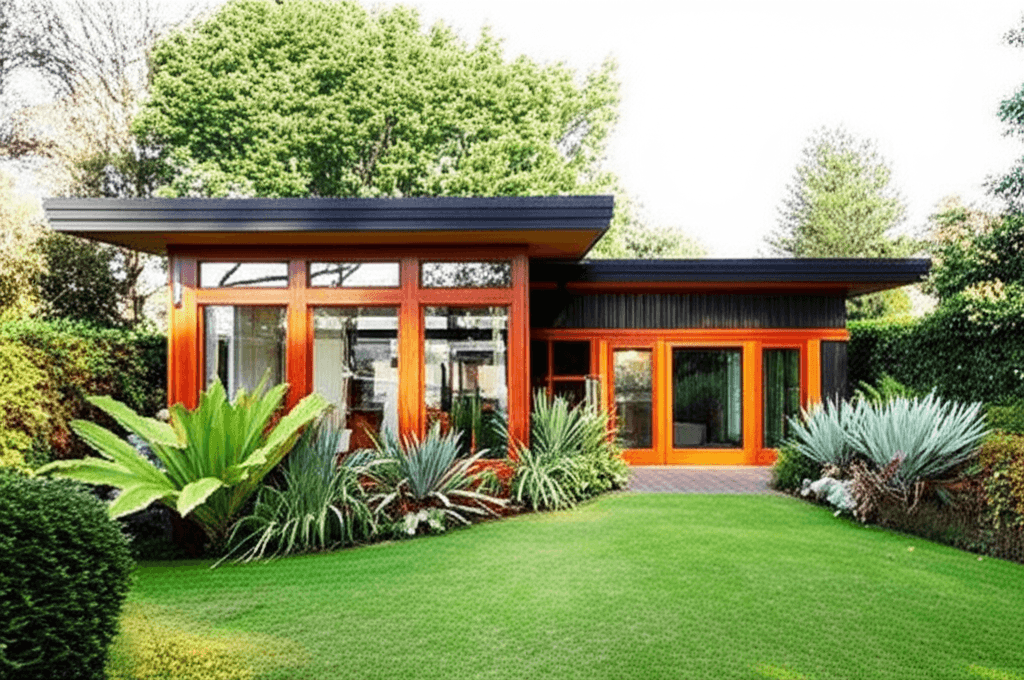
Quick Answer: Granny flats in NZ (legally called minor dwellings) are self-contained secondary dwellings built on your existing property. Since 15 January 2026, standalone granny flats up to 70m² can be built without building consent or resource consent under two new laws: the Building (Small Stand-alone Dwellings) Amendment Act 2025 and the NES-DMRU (National Environmental Standards for Detached Minor Residential Units). You still need licensed building professionals, a PIM from your council, and must meet site-specific conditions including setbacks, site coverage, and natural hazard screening. Costs range from $150,000 to $350,000 depending on size, spec, and location.
Granny flats have become one of the most popular building projects in New Zealand. Whether you’re looking to house aging parents, create rental income, or add a home office, a well-built granny flat adds genuine value to your property.
But the rules around granny flats in NZ can be confusing — and they changed significantly in January 2026. Two new laws — the building consent exemption and the NES-DMRU resource consent exemption — removed the biggest regulatory hurdles for standalone granny flats up to 70m². Terms like “minor dwelling,” “secondary dwelling,” and “small stand-alone dwelling” all float around, and district plan requirements still vary from council to council.
This guide covers everything you need to know about building a granny flat in New Zealand in 2026, including the new consent exemption rules, size limits, realistic costs, and design options.
What’s in This Guide
- What is a granny flat in NZ?
- NZ rules and regulations
- 2026 Building Consent Exemption
- NES-DMRU: Resource Consent Exemption
- Building consent for non-qualifying granny flats
- 1-bedroom vs 2-bedroom granny flats
- How much does a granny flat cost?
- Design and planning considerations
- Building a granny flat in Wellington
- Why Choose Clearcut Building Solutions
- Frequently Asked Questions
What Is a Granny Flat in NZ?
In New Zealand, “granny flat” is the common term for what councils and legislation refer to as a minor dwelling or secondary dwelling. It’s a small, self-contained home built on the same property as your main house.
A granny flat typically includes its own kitchen, bathroom, bedroom, and living area. It can be a standalone building in your backyard, attached to your main house, or even converted from an existing garage or workshop.
Granny Flat vs Minor Dwelling vs Secondary Dwelling
These terms are often used interchangeably, but there are subtle differences worth knowing:
| Term | Meaning | Used By |
|---|---|---|
| Granny Flat | Informal term for any small secondary dwelling on a property | General public |
| Minor Dwelling | A self-contained dwelling up to 65m² on a site with an existing primary dwelling | Most NZ councils |
| Secondary Dwelling | Broader term for any additional dwelling on a residential site | Building Act / legislation |
| Dependent Person’s Dwelling | Older term for granny flats specifically housing a family member (largely phased out) | Older district plans |
Regardless of the name, the rules that matter are your local council’s district plan provisions and the national Building Code requirements. In practice, most councils across NZ treat them the same way.
Granny Flat Rules in NZ: What You Need to Know
Building a granny flat in New Zealand isn’t as simple as dropping a prefab unit in your backyard. There are national-level building rules and council-specific district plan rules that both need to be satisfied.
National Rules (Building Act 2004)
Under the Building Act, granny flats have historically required building consent regardless of size. However, as of 15 January 2026, a new exemption allows qualifying standalone granny flats up to 70m² to be built without full building consent (see the 2026 consent exemption section below). Whether exempt or consented, all granny flats must still meet the Building Code minimum standards for:
- Structural integrity – must withstand wind and seismic loads for your region
- Weathertightness – cladding, roofing, and joinery must meet E2 requirements
- Fire safety – smoke alarms, fire-rated construction where required
- Insulation – must meet H1 energy efficiency requirements (updated in 2023)
- Plumbing and drainage – connections to council services or approved on-site systems
- Accessibility – minimum door widths and level entry thresholds
Council District Plan Rules
Each council sets its own rules for granny flats through their district plan. These typically cover:
- Maximum floor area – most commonly 65m², though some councils allow up to 80m²
- Minimum lot size – your section must be large enough (often 500m²+)
- Site coverage – total building footprint as a percentage of your land (usually 35-45%)
- Height limits – typically single storey, 4-5 metres maximum
- Setbacks – minimum distances from boundaries (usually 1-3 metres)
- Parking – an additional car park may be required
- One per site – most district plans only allow one minor dwelling per property
Rules by Major Council
| Council | Max Floor Area | Min Lot Size | Key Notes |
|---|---|---|---|
| Wellington City | 65m² | Varies by zone | Permitted activity in most residential zones |
| Auckland | 65m² | Varies by zone | Unitary Plan allows minor dwellings in most residential zones |
| Christchurch | 80m² | 450m²+ | More generous size limit than most councils |
| Hamilton | 65m² | 500m²+ | Must be ancillary to main dwelling |
| Hutt City | 65m² | 400m²+ | Permitted activity in General Residential zone |
| Porirua | 65m² | Varies | Check proposed district plan for updated rules |
Important: Always check your specific council’s district plan before starting. Rules can vary significantly between zones within the same city, and plans are regularly updated.
2026 Consent Exemption: Building a Granny Flat Without Full Consent
The biggest change to granny flat rules in a generation came into effect on 15 January 2026. The Building and Construction (Small Stand-alone Dwellings) Amendment Act 2025, passed on 23 October 2025, created a new exemption from building consent for qualifying granny flats.
What Changed
Previously, every granny flat in New Zealand required a full building consent application — a process that typically cost $3,000–$6,000 in council fees alone and took 20+ working days. Under the new rules, standalone granny flats up to 70 square metres can bypass the full consent process if they meet all qualifying conditions.
Qualifying Conditions for the Exemption
To build a granny flat without full building consent under the 2026 exemption, your project must meet all of the following:
- Maximum 70m² internal floor area (measured between finished internal faces of external walls, including any internal garage)
- Standalone structure — not attached to the main house
- Single storey only — no mezzanine floors
- New build — not an alteration or addition to an existing building
- Built to NZ Building Code — must meet all code clauses for structure, weathertightness, fire, insulation, plumbing, and drainage
- Licensed building professionals — must be constructed or supervised by an LBP (Licensed Building Practitioner)
- Site conditions met — no natural hazards, boundary setbacks, height-to-boundary, and drainage conditions must all be satisfied
Construction Design Conditions
Beyond the site and size requirements, the exemption also sets specific construction and design conditions that many homeowners overlook. Your exempt granny flat must comply with all of the following:
| Requirement | Detail |
|---|---|
| Framing | Lightweight steel or timber framing with lightweight roof cladding only |
| Wall cladding weight | Maximum 220 kg/m² — rules out heavy masonry, brick veneer, and concrete block walls |
| Showers | Prefabricated acrylic shower units only — no tiled wet-floor showers, no waterproof membrane systems |
| Heating | No solid-fuel heaters (wood burners, pellet fires). Heat pumps, electric heaters, and gas heating are permitted |
| Water and drainage | Must connect to council network water supply and drainage, or have a compliant on-site system |
| Floor level | Finished floor level must be no more than 600mm above ground level at any point |
These conditions are designed to keep exempt granny flats within a scope that licensed builders can reliably deliver without independent council inspection. The acrylic shower and wood burner restrictions are the ones that catch most people off guard — if you want a tiled walk-in shower or a log burner, you will need to go through the standard building consent process instead.
The New Streamlined Process
Instead of a full building consent, the exemption requires:
- Get a Project Information Memorandum (PIM) from your council before building. The council must issue this within 10 working days and will confirm whether your site and proposal are likely to qualify.
- Notify your council before construction starts.
- Build using licensed professionals — all restricted building work must be carried out or supervised by an LBP.
- Notify your council on completion and submit all required documentation within 20 working days.
Documentation Required on Completion
When your exempt granny flat is finished, you must submit the following to your council within 20 working days of completion:
- Final design plans — as-built drawings showing the completed dwelling
- Records of Work (RoW) — from the Licensed Building Practitioner who carried out or supervised the restricted building work
- Certificates of Work (CoW) — for any restricted design work (e.g. engineering)
- Plumber/drainlayer Records of Work — for all plumbing and drainage connections
- Electrical safety certificates — certificate of compliance from a registered electrician
- Energy work certificates — for gas fitting if applicable
Your builder should compile these documents as standard practice. In many councils, including Upper Hutt, documentation is submitted through the Simpli online platform. PIM fees vary by council — for example, Upper Hutt charges $660 for a small stand-alone dwelling PIM. Check with your local council for current fees.
What the Exemption Does NOT Cover
The consent exemption is specifically for new standalone dwellings. It does not apply to:
- Tiny homes on wheels or movable-base structures
- Container homes or imported kitsets not designed for NZ Building Code compliance
- Attached granny flats or additions to existing buildings
- Multi-storey or mezzanine designs
- Builds that don’t use licensed building professionals
Important: The building consent exemption does not override district plan or resource consent requirements. Your granny flat must still comply with your council’s zoning rules for site coverage, setbacks, height, and parking. If it breaches any district plan rule, you will still need resource consent even though you may not need building consent.
Do You Still Need a Builder?
Yes. The exemption requires licensed building professionals to carry out or supervise the work. This is not a DIY pathway. The intent is to reduce red tape and consent costs, not to lower building quality standards. A well-built, code-compliant granny flat still needs experienced builders who understand the Building Code, especially in regions like Wellington with specific seismic and wind zone requirements.
NES-DMRU: Resource Consent Exemption for Granny Flats
Alongside the building consent exemption, a second piece of legislation came into force on 15 January 2026 that many homeowners overlook: the National Environmental Standards for Detached Minor Residential Units (NES-DMRU).
The NES-DMRU is a resource management regulation that makes qualifying granny flats a permitted activity under the Resource Management Act 1991. This means you do not need resource consent from your council, and your neighbours do not need to be notified.
How the NES-DMRU Works with the Building Consent Exemption
Previously, building a granny flat required two separate consents: a building consent (under the Building Act) and potentially a resource consent (under the RMA). The 2026 changes addressed both:
| Consent Type | Before Jan 2026 | After Jan 2026 |
|---|---|---|
| Building consent | Required for all granny flats | Exempt for qualifying standalone units up to 70m² |
| Resource consent | Required unless fully compliant with district plan | Permitted activity under NES-DMRU if conditions met |
NES-DMRU Conditions
For your granny flat to qualify as a permitted activity under the NES-DMRU (no resource consent required), it must meet these conditions:
- Maximum 70m² gross floor area
- One per site — only one detached minor residential unit per property
- Standalone structure — not attached to the main dwelling
- Setbacks: At least 2 metres from front, side, and rear boundaries in residential zones (10m front / 5m side and rear in rural zones)
- Setback from main house: At least 2 metres from the principal residence
- Site coverage: No more than 50% total building coverage in residential zones
- Applicable zones: Residential, rural, Māori purpose, and mixed-use zones
When You Still Need Resource Consent
The NES-DMRU does not override all planning rules. You may still need resource consent if:
- Your site is in a natural hazard overlay (flood plain, fault line, coastal inundation, liquefaction zone)
- Your property is in a heritage area or character precinct
- The granny flat breaches any NES-DMRU condition (e.g. setbacks, site coverage)
- Your site has title covenants that restrict additional dwellings
- Earthworks exceed permitted thresholds
Important for Wellington homeowners: Wellington City Council screens sites against 18 hazard and overlay layers, including the Wellington, Ohariu, Terawhiti, and Shepherds Gully fault lines, tsunami zones, coastal inundation, flood areas, liquefaction zones, heritage areas, and character precincts. Many Wellington properties will trigger at least one overlay, meaning resource consent may still be required even though the NES-DMRU technically applies. Always get a site-specific assessment before assuming your project is fully exempt.
Building Consent for Granny Flats That Don’t Qualify for the Exemption
If your granny flat doesn’t qualify for the 2026 consent exemption (for example, it’s attached to the main house, larger than 70m², or multi-level), you will need to apply for a full building consent. Here’s what’s involved:
What You Need for Consent
- Architectural plans – detailed drawings showing layout, dimensions, materials
- Engineering calculations – structural, geotechnical (especially on sloping sites)
- Site plan – showing the granny flat’s position relative to boundaries, the main house, and services
- Building Code compliance documentation – demonstrating the design meets all relevant clauses
- Producer statements – for specific products and systems
Consent Costs and Timeframes
| Item | Typical Cost | Timeframe |
|---|---|---|
| Building consent application | $3,000 – $6,000 | 20 working days (statutory) |
| Resource consent (if required) | $2,000 – $8,000 | 20 working days (non-notified) |
| Architectural plans | $5,000 – $15,000 | 4-8 weeks |
| Engineering | $3,000 – $8,000 | 2-4 weeks |
Resource consent is needed if your granny flat breaches any district plan rules (e.g. it’s too close to a boundary, exceeds site coverage, or is in a special zone). If it fully complies with the district plan, you typically only need building consent.
1-Bedroom vs 2-Bedroom Granny Flats
The size of your granny flat depends on who will live in it, your budget, and what your council allows. Here’s how the two most common configurations compare:
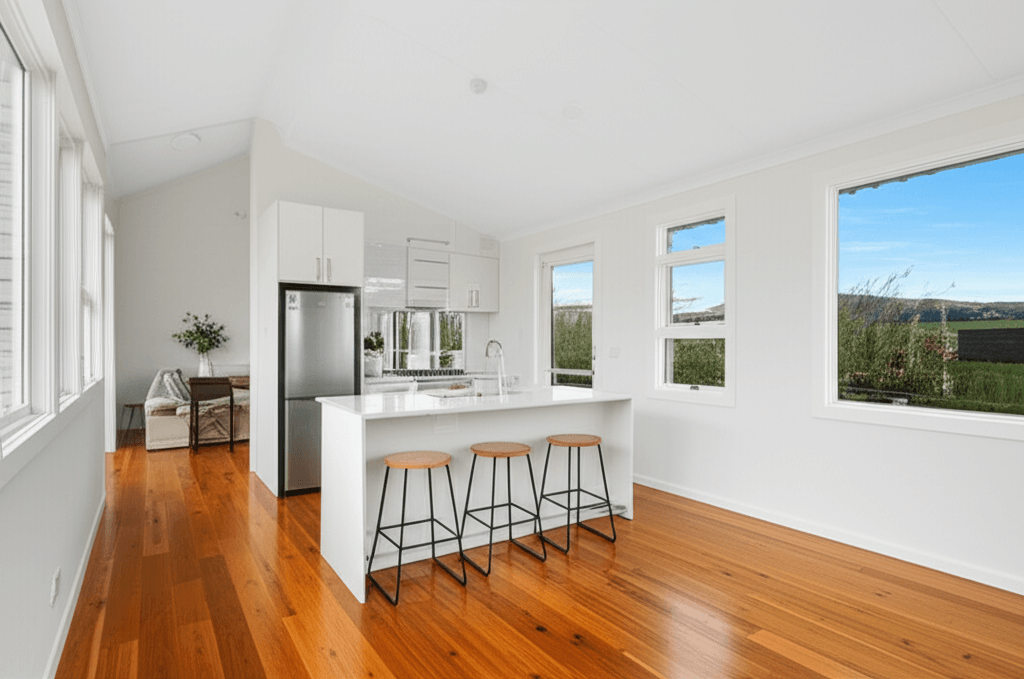
1-Bedroom Granny Flat (35-50m²)
A one-bedroom granny flat is the most popular option in NZ. At 35-50m², it fits comfortably within most council size limits and keeps construction costs lower.
Typical layout:
- Open-plan kitchen and living area
- One double bedroom
- Bathroom with shower
- Small laundry nook or cupboard
- Optional: covered outdoor area or deck
Best for: A single parent, couple, home office with occasional guest use, or rental income.
Estimated cost: $150,000 – $250,000
2-Bedroom Granny Flat (50-65m²)
A two-bedroom granny flat pushes closer to the typical 65m² limit. It offers more flexibility and better rental returns, but costs more to build.
Typical layout:
- Open-plan kitchen, dining, and living
- Two bedrooms (one double, one single or double)
- Bathroom
- Separate laundry or laundry cupboard
- Small entrance or hallway
Best for: Small families, multi-generational living (parents with a caregiver), or higher rental yield.
Estimated cost: $220,000 – $350,000
Size Comparison at a Glance
| Feature | 1-Bedroom | 2-Bedroom |
|---|---|---|
| Floor area | 35 – 50m² | 50 – 65m² |
| Build cost | $150K – $250K | $220K – $350K |
| Build time | 12 – 16 weeks | 16 – 22 weeks |
| Rental income (approx) | $350 – $500/week | $450 – $650/week |
| Consent complexity | Lower | Higher (closer to limits) |
How Much Does a Granny Flat Cost in NZ?
The total cost of building a granny flat in New Zealand depends on several factors: size, site conditions, materials, and your region. Here’s a realistic breakdown for 2026.
Cost Breakdown
| Cost Component | Range | Notes |
|---|---|---|
| Design and architectural plans | $5,000 – $15,000 | Custom design vs standard plans |
| Engineering | $3,000 – $8,000 | More on sloping or complex sites |
| Building consent | $3,000 – $6,000 | Council fees vary by region |
| Site preparation | $5,000 – $25,000 | Excavation, retaining, access |
| Construction | $120,000 – $280,000 | The build itself (materials + labour) |
| Services connection | $8,000 – $20,000 | Water, sewer, power, internet |
| Landscaping and outdoor areas | $3,000 – $15,000 | Pathways, fencing, planting |
| Total | $150,000 – $350,000 | Depending on size and spec |
Development Contributions
One cost many homeowners miss is development contributions. Most councils charge a development contribution when a new dwelling is created on a site, even if the granny flat is exempt from building consent. In the Wellington region, development contributions typically range from $5,000 to $25,000 depending on your council and the services required (water, wastewater, transport, reserves). Check with your council early — this is a non-negotiable cost that applies regardless of the consent pathway.
For a detailed cost breakdown specific to the Wellington region, see our guide to minor dwelling costs in Wellington.
What Affects the Price Most?
Site conditions are the biggest variable. A flat, accessible section with existing services nearby could save $20,000+ compared to a sloping site that needs retaining walls, extended drainage, and difficult access for machinery.
Spec level also matters significantly. Standard fixtures, vinyl flooring, and painted walls keep costs down. Timber flooring, stone benchtops, and premium joinery can push a 50m² granny flat well past $300,000.
Design and Planning Considerations
Getting the design right from the start saves money and avoids consent headaches down the track. Here are the key things to consider.
Orientation and Natural Light
Position your granny flat to capture northern sun. In New Zealand, north-facing living areas and bedrooms make a significant difference to warmth and comfort, especially during winter. Large windows on the north side and smaller openings on the south keep the space bright without excessive heat loss.
Privacy for Both Dwellings
Think about the relationship between your granny flat and the main house. Stagger windows so they don’t look directly into each other. Use fencing, planting, or screen walls to create visual separation without feeling closed in. A shared outdoor space can work well, but each dwelling should have its own private area too.
Future-Proofing
If the granny flat is for aging parents now, consider what happens in 10-15 years. Design with wider doorways (minimum 860mm), level-entry showers, and step-free access from the start. These features add minimal cost during construction but are expensive to retrofit later, and they make the dwelling more versatile for future use as a rental or guest house.
Energy Efficiency
New builds must meet the updated H1 insulation standards. Going beyond the minimum makes sense for a small dwelling where heating costs can be kept very low with good design. Consider:
- Double glazing (minimum requirement in most zones)
- Continuous wall insulation above minimum R-values
- Heat pump (the most efficient heating for NZ granny flats)
- LED lighting throughout
- Solar panels if the roof orientation suits
Materials
Common cladding options for NZ granny flats include weatherboard (timber or fibre cement), brick veneer, and panel systems. Roofing is typically long-run steel. Interior linings are usually standard plasterboard with timber or vinyl flooring.
For more on design inspiration, check out our minor dwelling design ideas guide.
Building a Granny Flat in Wellington: What You Need to Know
Wellington presents unique challenges for granny flat projects that other regions don’t face. If you’re building in Wellington City, Lower Hutt, Upper Hutt, or Porirua, here are the considerations that affect your build.
Steep Sites and Access
Most Wellington sections are not flat. Sloping sites require retaining walls, engineered foundations, and sometimes crane access for materials — all of which add cost. A granny flat on a steep section can cost $30,000–$60,000 more than the same build on a flat site, primarily due to foundation engineering and site preparation.
Seismic and Wind Zones
Wellington sits in NZ’s highest seismic zone. Every granny flat — whether consent-exempt or not — must be engineered for local earthquake and wind loads. This means heavier foundations, more robust framing, and specific bracing requirements. These aren’t optional extras; they’re Building Code requirements that apply regardless of the consent pathway.
Natural Hazard Screening
This is the biggest catch for Wellington homeowners hoping to use the consent-free pathway. Wellington City Council screens properties against 18 hazard and overlay layers, including:
- Fault lines: Wellington Fault, Ohariu Fault, Terawhiti Fault, Shepherds Gully Fault
- Tsunami zones: Three separate tsunami inundation layers
- Flood and coastal inundation areas
- Liquefaction zones
- Heritage areas and character precincts
If your property falls within any of these overlays, the NES-DMRU permitted activity status may not apply, and you could still need resource consent. Many properties in suburbs like Thorndon, Mt Victoria, Petone, and along the south coast trigger at least one overlay.
50% Site Coverage Cap
In Wellington’s inner suburbs, where sections are often 300–500m², the 50% maximum site coverage under the NES-DMRU does real work. If your main house already covers 40% of the site, you may only have room for a very small granny flat before exceeding the limit. Calculate your existing coverage carefully before committing to a design.
Our recommendation: Get a PIM (Project Information Memorandum) from your council early. It costs a few hundred dollars and tells you exactly what rules apply to your specific site before you spend thousands on design and engineering.
Why Choose Clearcut Building Solutions
If you’re planning a granny flat in the Wellington region, our minor dwelling building specialists manage the entire process from initial site assessment through to handover.
Our design-build specialists in Wellington handle the design, consenting, construction, and project management so you don’t have to coordinate multiple contractors yourself. Every build comes with the Halo 10-Year Guarantee for long-term peace of mind.
Our team has built granny flats and minor dwellings across Wellington City, Lower Hutt, Upper Hutt, Porirua, and the Kapiti Coast. We understand the local council requirements, the terrain challenges (Wellington is not flat), and how to design compact spaces that feel open and liveable.
Frequently Asked Questions
How big can a granny flat be in NZ?
The new 2026 consent exemption applies to standalone granny flats up to 70m². For district plan purposes, most councils cap minor dwellings at 65m² of gross floor area under their zoning rules, while some councils like Christchurch allow up to 80m². The building consent exemption and district plan size limits are separate requirements — your granny flat must satisfy both. Always check your specific council’s district plan.
Do I need resource consent or building consent for a granny flat?
It depends. Since January 2026, qualifying standalone granny flats up to 70m² are exempt from building consent, though you still need a PIM (Project Information Memorandum) from your council. Separately, if your granny flat meets all your council’s district plan rules (size, setbacks, site coverage, height, parking), it’s typically a permitted activity and doesn’t need resource consent. If it breaches any district plan rule, you’ll need resource consent regardless of whether you’re exempt from building consent.
Can I rent out my granny flat?
Yes. In most NZ councils, there are no restrictions on renting out a minor dwelling to non-family members. The older “dependent person’s dwelling” rules that required the occupant to be a family member have largely been removed from district plans. Check your specific title and council rules to confirm.
How long does it take to build a granny flat?
A typical granny flat takes 12-22 weeks to build once consent is granted. The full timeline from initial design to moving in is usually 6-12 months, including the design phase (4-8 weeks), consenting (4-8 weeks), and construction.
Will a granny flat add value to my property?
Generally yes. A well-built, consented granny flat can add $150,000-$300,000 to your property value depending on location, size, and quality. The rental income potential (typically $350-$650/week) also makes it attractive to future buyers.
Can I build a granny flat without building consent in NZ?
Yes, as of 15 January 2026. The Building (Small Stand-alone Dwellings) Amendment Act 2025 allows standalone granny flats up to 70m² to be built without full building consent, provided they are single-storey, new builds, constructed by licensed building professionals, and meet all site-specific conditions. You still need a PIM from your council and must notify them before and after construction. District plan rules (resource consent) still apply separately.
What’s the difference between a granny flat and a tiny house?
A granny flat is a permanent, consented building on a fixed foundation. A tiny house is usually a portable structure on wheels. Tiny houses face different (and often more restrictive) rules around where they can be placed and whether they can be permanently occupied. For a permanent secondary dwelling, a granny flat built to code is the more straightforward option.