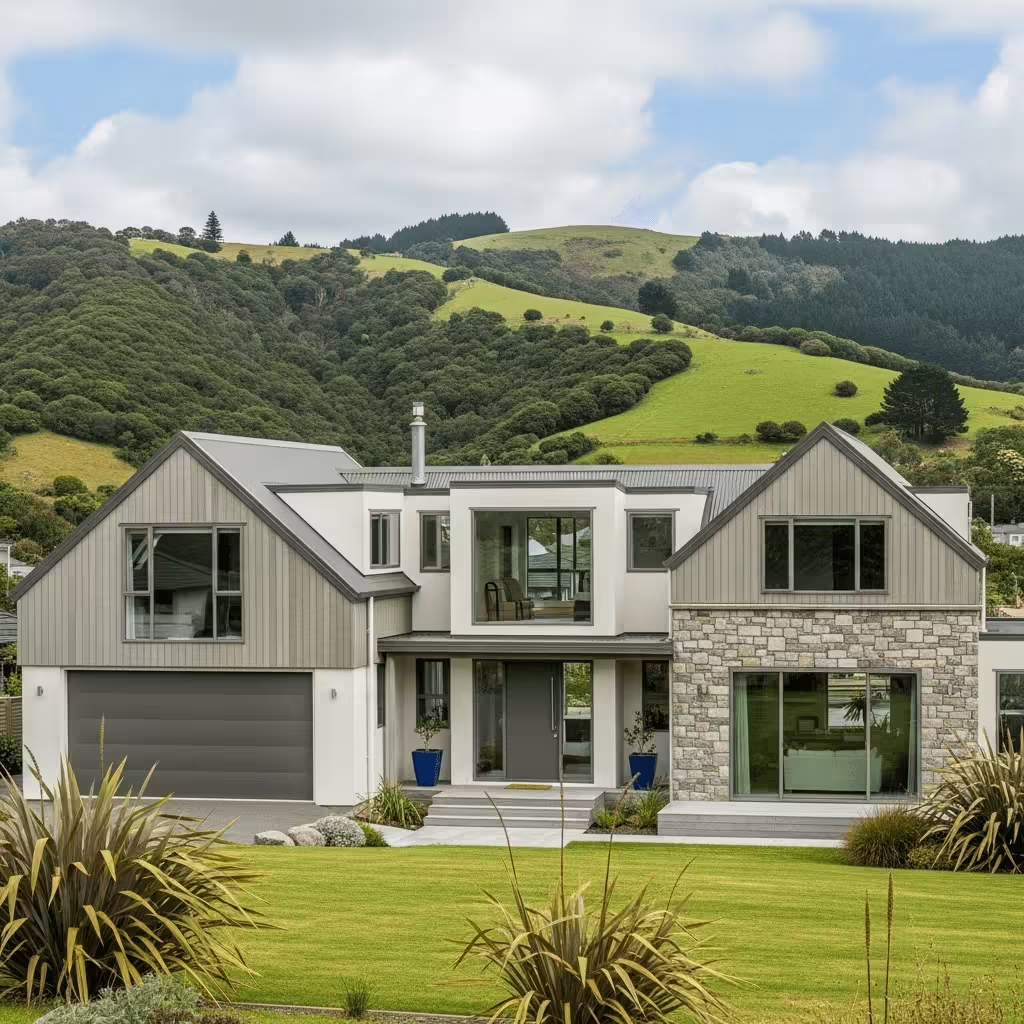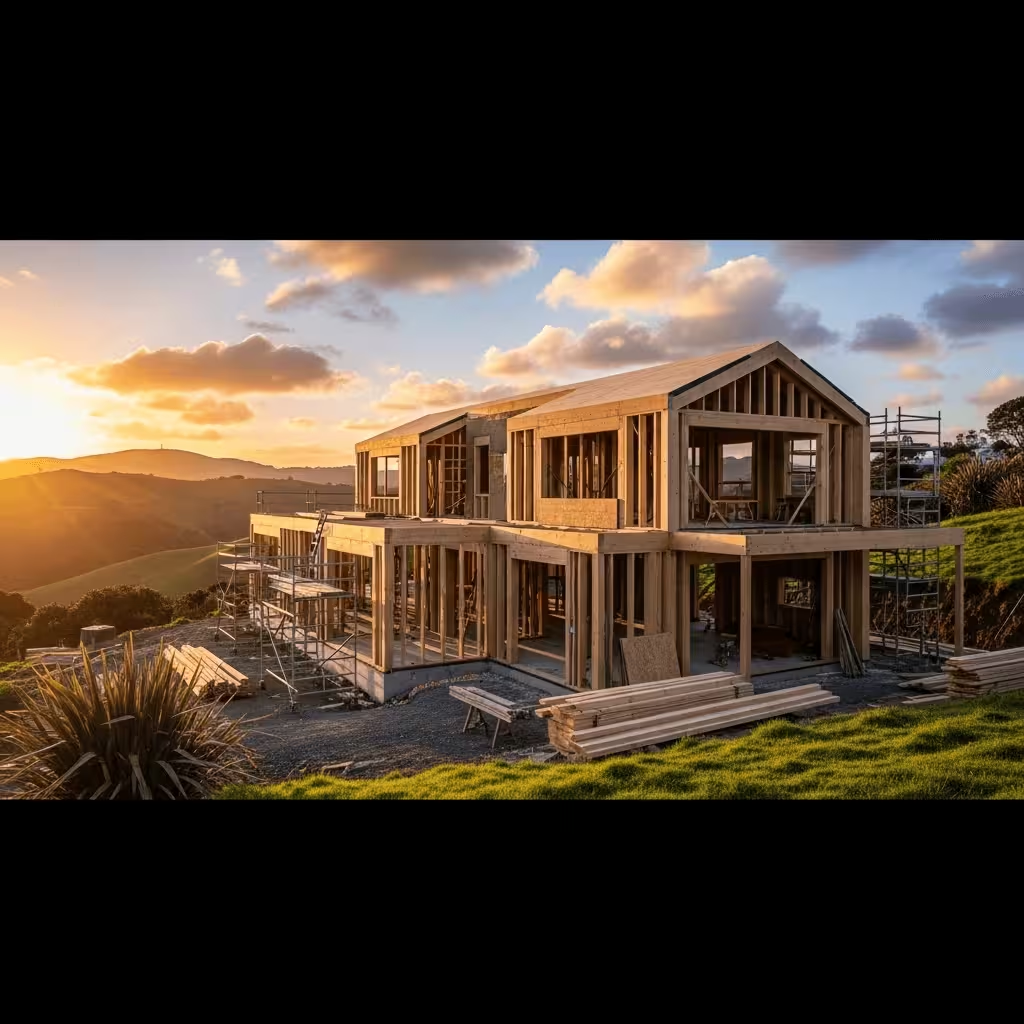
Quick Answer: Choosing the right materials is one of the most important decisions in any Wellington renovation. From engineered stone benchtops and engineered timber flooring to cedar cladding and double glazing, the materials you select affect how your home looks, performs, and holds its value. This guide covers the premium options that Wellington builders and architects recommend for high-quality renovations in suburbs like Thorndon, Kelburn, and Oriental Bay.
What’s in This Guide
- Kitchen Benchtop Materials
- Engineered Timber Flooring
- Exterior Cladding Options
- Double Glazing and Joinery
- Premium Fixtures and Hardware
- How Material Choices Affect Your Home’s Value
- Why Choose Clearcut for Your Wellington Renovation
- FAQs
Kitchen Benchtop Materials
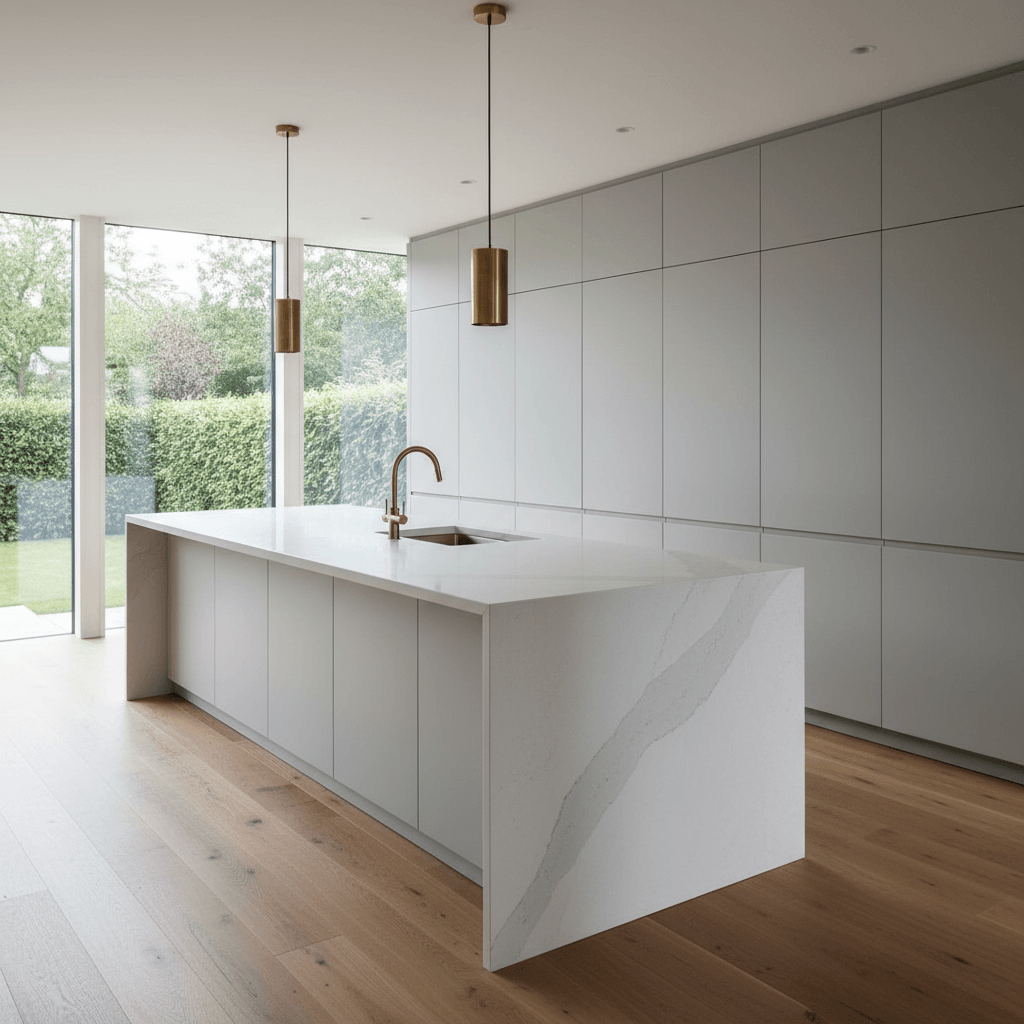
The benchtop is often the centrepiece of a kitchen renovation. It needs to handle daily use, resist heat and staining, and look good for decades. Here’s how the premium options compare for Wellington homes.
Engineered stone benchtops
Engineered stone (brands like Caesarstone, Silestone, and Smartstone) is the most popular premium benchtop material in New Zealand. It’s made from approximately 90% natural quartz bound with polymer resins, producing a surface that’s harder and more consistent than natural stone.
- Durability — Highly scratch and stain resistant, non-porous, no sealing required
- Cost — $600-$1,200+ per linear metre installed, depending on edge profile and thickness
- Best for — High-use family kitchens, waterfall edges, island benchtops
- Consideration — Not fully heat resistant. Always use trivets for hot pots
Natural stone benchtops
Marble and granite remain the benchmark for luxury kitchens. Nothing replicates the depth and character of natural stone — every slab is unique.
- Marble — Timeless elegance, but porous and requires regular sealing. Expect $800-$1,500+ per linear metre. Best suited to bathrooms and low-traffic areas, or homeowners who appreciate a natural patina
- Granite — Harder and more practical than marble, excellent heat resistance. $700-$1,300+ per linear metre
- Quartzite — Natural stone that combines marble’s aesthetics with granite’s durability. Premium pricing at $1,000-$2,000+ per linear metre
Porcelain benchtops
Porcelain (brands like Dekton, Neolith, and Laminam) is gaining popularity in architect-designed kitchens. These ultra-thin, large-format slabs offer exceptional performance.
- Durability — UV stable, heat resistant, scratch resistant, and virtually maintenance-free
- Cost — $800-$1,400+ per linear metre installed
- Best for — Indoor-outdoor kitchens, homes with large glass frontages where UV exposure is a factor
- Consideration — Requires specialist fabrication. Not all kitchen installers work with porcelain
Timber benchtops
Solid timber benchtops bring warmth and character that no engineered material can replicate. In Wellington’s heritage homes, they complement original features beautifully.
- Best species — American oak, European beech, or recycled native timbers (rimu, matai) for character homes
- Cost — $400-$900+ per linear metre depending on species and finish
- Maintenance — Requires oiling every 6-12 months. Will develop a patina over time
- Best for — Breakfast bars, butler’s pantries, or as an accent alongside stone on the main bench
| Material | Cost per Linear Metre | Maintenance | Best For |
|---|---|---|---|
| Engineered stone | $600-$1,200+ | Very low | Most kitchens |
| Marble | $800-$1,500+ | High (sealing) | Luxury bathrooms, feature pieces |
| Granite | $700-$1,300+ | Low | Heavy-use kitchens |
| Porcelain | $800-$1,400+ | Very low | Indoor-outdoor, UV exposure |
| Timber | $400-$900+ | Moderate (oiling) | Character homes, accent pieces |
Engineered Timber Flooring
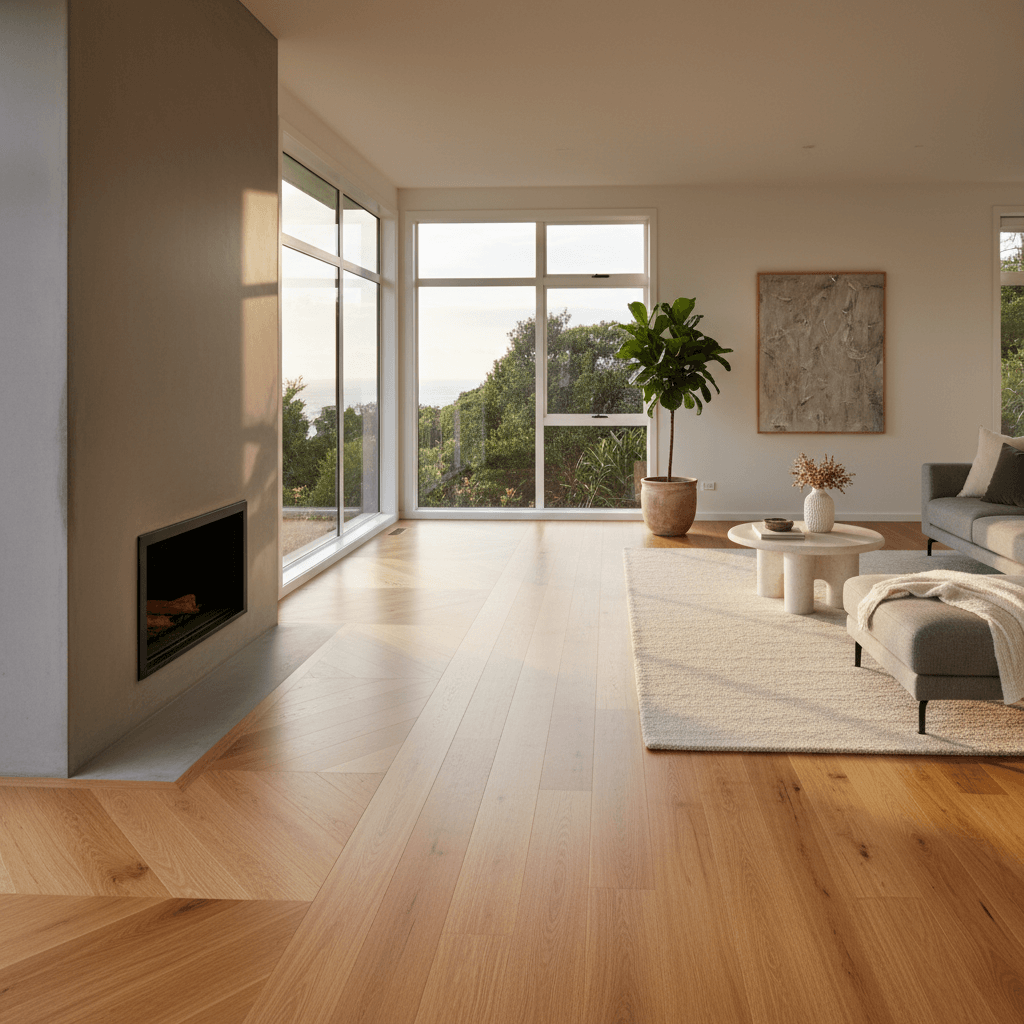
Flooring sets the tone for your entire renovation. In Wellington’s premium suburbs, engineered timber flooring has become the go-to choice for both new builds and renovations — and for good reason.
Why engineered timber over solid?
Engineered timber flooring consists of a real hardwood top layer (typically 3-6mm) bonded to a stable plywood or HDF core. This construction makes it more dimensionally stable than solid timber, which matters in Wellington’s variable humidity.
- Stability — Less expansion and contraction than solid timber, suitable for underfloor heating
- Installation — Can be floated, glued, or secret-nailed over most substrates including concrete
- Refinishing — Quality boards with a 4mm+ wear layer can be sanded and refinished 2-3 times
- Cost — $120-$350+ per square metre supplied and installed, depending on species and width
Premium species for Wellington homes
- European oak — The most popular choice. Available in wide planks (180-260mm), multiple finishes from natural to smoked. Works in both modern and traditional homes
- American walnut — Rich, dark tones with distinctive grain. A premium option for homes with architectural detailing
- Recycled native timber — Rimu, matai, and heart totara reclaimed from demolition sites. Ideal for heritage renovations in suburbs like Thorndon, Wadestown, and Northland where matching original flooring is important
- Herringbone and chevron patterns — Engineered timber makes geometric patterns practical and affordable. A strong design statement in entrance halls and living areas
Exterior Cladding Options
For homes undergoing a reclad or extension, the cladding material defines the home’s street presence and long-term weather performance. Wellington’s exposure to wind, rain, and salt air makes material selection particularly important.
Cedar cladding
Western red cedar is the premium timber cladding choice in New Zealand. It’s naturally resistant to rot and insects, dimensionally stable, and weathers beautifully.
- Profiles — Weatherboard, shiplap, vertical board-and-batten, or panel
- Finish options — Clear-coated to maintain the natural colour, stained, or left to weather to a silver-grey
- Cost — $150-$280+ per square metre installed, depending on profile and finish
- Maintenance — Stained or oiled finishes need re-coating every 3-5 years. Weathered cedar requires minimal maintenance
Fibre cement cladding
Fibre cement (brands like James Hardie and BGC) offers excellent durability with lower maintenance than timber. Available in weatherboard profiles that replicate traditional timber, or as sheet cladding for a modern aesthetic.
- Durability — Non-combustible, rot-proof, resistant to moisture damage
- Cost — $100-$200+ per square metre installed
- Best for — Homeowners wanting a traditional weatherboard look with minimal upkeep, or modern sheet-clad designs
Metal cladding
Standing seam or corrugated metal cladding delivers a clean, contemporary look. Often used in combination with timber or fibre cement on architect-designed homes.
- Options — Colorsteel, zinc, or copper. Standing seam for a refined finish, corrugated for a more industrial aesthetic
- Cost — $120-$250+ per square metre installed
- Best for — Modern builds and extensions, feature walls, garages
| Cladding | Cost per m² | Maintenance | Lifespan |
|---|---|---|---|
| Cedar weatherboard | $150-$280+ | Re-coat every 3-5 years | 40-60+ years |
| Fibre cement | $100-$200+ | Repaint every 10-15 years | 50+ years |
| Metal (Colorsteel) | $120-$250+ | Very low | 50+ years |
Double Glazing and Joinery
Wellington’s weather makes double glazing one of the highest-impact upgrades you can make. It reduces heat loss, cuts condensation, and significantly improves comfort — particularly important for exposed hillside homes in suburbs like Roseneath, Seatoun, and Khandallah.
Double glazing options
- Standard IGU — Two panes of glass with an air gap. The minimum standard for new builds and most renovations
- Low-E glass — A metallic coating on the inner pane that reflects heat back into the room. Significantly improves thermal performance
- Argon-filled — Argon gas between the panes provides better insulation than air. Common in premium installations
- Acoustic laminated — Reduces noise transmission. Worth considering for homes near busy roads or flight paths
Joinery materials
- Thermally broken aluminium — The standard for high-performance homes. A thermal break in the frame prevents cold transfer. Cost-effective and low maintenance
- Timber joinery — Premium option that suits heritage and architectural homes. Offers natural warmth and excellent thermal performance, but requires more maintenance
- Composite (timber/aluminium) — Timber interior with aluminium exterior. Combines the aesthetic of timber inside with the durability of aluminium outside. The premium choice for architect-designed renovations
Retrofit vs replacement
Retrofit double glazing involves fitting new double-glazed units into your existing timber frames. It’s cost-effective and preserves the character of heritage joinery. Full replacement with new thermally broken aluminium or composite joinery costs more but delivers better overall performance. Your builder and architect can advise on the best approach for your home.
Premium Fixtures and Hardware
The details matter. Premium tapware, handles, and hardware are what separate a good renovation from a great one.
Tapware
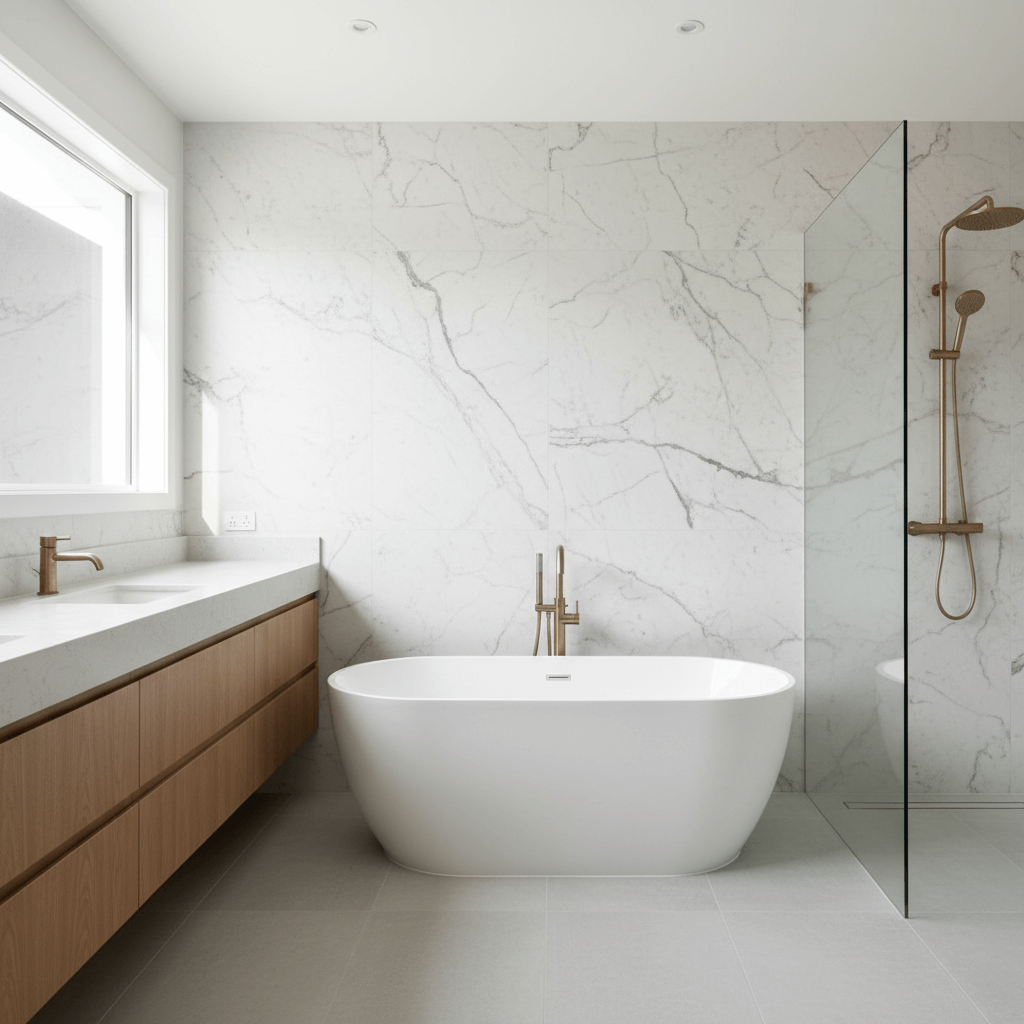
- Brushed brass and gold — Currently the most popular premium finish. Pairs well with engineered stone and marble
- Matte black — A modern classic that works across most design styles
- Brushed nickel — Subtle and versatile, suits both traditional and contemporary kitchens
- Budget — $200-$500 per mixer. Premium — $800-$2,000+ for brands like Brodware, Astra Walker, or Sussex
Cabinet hardware
- Architectural handles — Solid brass or stainless steel pulls make a noticeable difference to how a kitchen feels. Budget $30-$80 per handle for quality options
- Push-to-open — Handleless cabinetry creates clean lines, popular in modern and minimalist designs
Bathroom fixtures
- Freestanding baths — A centrepiece for premium bathroom renovations. Composite stone baths ($3,000-$8,000+) are lighter and warmer to the touch than cast iron
- Frameless glass showers — Standard in quality renovations. Budget $2,000-$5,000+ for custom frameless enclosures
- Wall-hung vanities and toilets — Clean lines, easier cleaning, and a sense of space. Require in-wall cisterns and solid framing
How Material Choices Affect Your Home’s Value
Premium materials don’t just look better — they’re a sound investment. Wellington’s property market increasingly rewards quality renovations, particularly in sought-after suburbs like Oriental Bay, Kelburn, and Hataitai.
- Engineered stone benchtops — Now expected in any quality kitchen. Laminate benchtops in a premium suburb signal a budget renovation and can actually reduce perceived value
- Double glazing — Mandatory in new builds and increasingly expected by buyers. A fully double-glazed home commands a measurable premium, particularly in Wellington’s exposed locations
- Quality flooring — Engineered timber or restored native flooring is a strong selling point. Carpet and vinyl in living areas signal a lower specification
- Cedar cladding — Natural timber cladding is a design feature in its own right. When maintained, it adds significant street appeal and perceived value
The key principle is consistency. A marble benchtop in a kitchen with budget vinyl flooring looks wrong. Premium materials work best when the overall specification is cohesive — which is where working with your builder and architect to plan the full material palette from the start makes a real difference.
Why Choose Clearcut for Your Wellington Renovation
We’ve worked with premium materials across hundreds of renovation projects, from heritage villas in Thorndon and Wadestown to modern homes in Roseneath and Seatoun. We know which materials perform in Wellington’s conditions and which suppliers deliver consistent quality.
- NZ Certified Builders — Backed by the Halo 10-year residential guarantee, covering both workmanship and materials
- Material expertise — We work with Wellington’s leading suppliers and can guide you through the options that suit your home, your design, and your budget
- Architect collaboration — We regularly work alongside architects on material selection, ensuring the specification matches the design intent and performs long-term
- Quality installation — Premium materials deserve expert installation. Our experienced team ensures every detail is finished to the standard the material demands
Whether you’re planning a kitchen renovation, a full home renovation, or a new build, we can help you choose materials that look outstanding and last.
Frequently Asked Questions
What is the best kitchen benchtop material for a Wellington home?
Engineered stone is the most popular choice for its combination of durability, low maintenance, and consistent appearance. For a more luxurious look, natural stone like marble or quartzite offers unmatched character. Your choice depends on how you use your kitchen and how much maintenance you’re comfortable with.
Is engineered timber flooring better than solid timber?
For most Wellington renovations, yes. Engineered timber is more dimensionally stable in our variable climate, compatible with underfloor heating, and can be installed over concrete. Quality engineered boards with a 4mm+ wear layer can be sanded and refinished multiple times, giving you the same longevity as solid timber.
How much does double glazing cost in Wellington?
Retrofit double glazing into existing timber frames costs approximately $300-$600 per window. Full replacement with thermally broken aluminium joinery costs $800-$1,500+ per window depending on size and specification. A typical three-bedroom home costs $8,000-$20,000+ for a full double glazing upgrade. Learn more about our renovation services.
Should I choose cedar or fibre cement cladding?
Cedar delivers a premium natural look and ages beautifully, but needs re-coating every 3-5 years. Fibre cement offers excellent durability with less ongoing maintenance. Many Wellington architects specify a combination — cedar for feature areas and fibre cement for less visible elevations. It comes down to your aesthetic preference and willingness to maintain natural timber.
Do premium materials actually add value to my home?
Yes, particularly in Wellington’s premium suburbs where buyers expect a high specification. Quality benchtops, double glazing, and timber flooring consistently add more value than they cost. The key is consistency across the renovation — mixing premium and budget materials within the same space can actually undermine the overall impression.
How do I choose materials that work together?
Start with the largest surfaces — flooring and benchtops — then build the palette from there. Work with your builder and architect to create a physical sample board before committing. Consider how materials will look together in your home’s natural light, not just in a showroom. A coordinated material palette is one of the biggest differences between a DIY renovation and a professionally managed project.