
Quick Answer: Earthquake strengthening protects your Wellington home by upgrading its structure to meet modern seismic standards. Many homes in suburbs like Thorndon, Oriental Bay, and Kelburn were built before current earthquake codes existed, and strengthening work typically involves foundation upgrades, bracing, and structural connections that bring your home closer to 100% NBS (New Building Standard).
What’s in This Guide
- Why Wellington Homes Need Earthquake Strengthening
- Understanding NBS Ratings and Earthquake Prone Buildings
- Common Earthquake Strengthening Methods
- Earthquake Strengthening Costs in Wellington
- The Earthquake Strengthening Process
- Why Choose Clearcut for Your Wellington Earthquake Strengthening
- FAQs

Why Wellington Homes Need Earthquake Strengthening
Wellington sits on one of the most seismically active regions in New Zealand. The Wellington Fault runs directly through the city, and GNS Science estimates there’s a 10-15% probability of a major rupture in the next 50 years. For homeowners in suburbs like Roseneath, Seatoun, and Wadestown, this isn’t a distant risk — it’s a practical reality that affects the safety and value of their homes.
Many of Wellington’s most desirable homes were built long before modern seismic design standards existed. Character villas in Thorndon and Northland, bungalows in Khandallah, and heritage properties across the inner suburbs often have unreinforced masonry foundations, insufficient bracing, and structural connections that wouldn’t meet today’s Building Code.
The 2016 Kaikōura earthquake was a turning point for many Wellington homeowners. Properties that appeared solid suffered cracked foundations, shifted piles, and structural damage that cost hundreds of thousands to repair. Since then, demand for proactive earthquake strengthening has grown significantly — particularly among owners of high-value homes who want to protect both their families and their investment.
Which homes are most at risk?
Not all homes carry the same seismic risk. The following construction types are most likely to need earthquake strengthening:
- Pre-1976 timber-framed homes — Built before NZS 3604 introduced standardised bracing and connection requirements
- Unreinforced masonry (URM) homes — Brick and stone construction without steel reinforcement is particularly vulnerable
- Homes on steep sites — Properties in hillside suburbs like Oriental Bay, Kelburn, and Hataitai face additional risk from slope instability during shaking
- Homes with concrete block foundations — Older concrete block can crack and separate under lateral loads
- Multi-storey timber homes — Upper levels create additional lateral forces that original bracing wasn’t designed to handle
Understanding NBS Ratings and Earthquake Prone Buildings
The NBS (New Building Standard) earthquake rating is the benchmark used to assess how a building would perform in a major earthquake compared to a new building designed to current code. It’s expressed as a percentage:
| NBS Rating | Classification | What It Means |
|---|---|---|
| Below 34% NBS | Earthquake prone | Legally classified as earthquake prone. Council may require strengthening within set timeframes. |
| 34-67% NBS | Earthquake risk | Not legally earthquake prone, but below the recommended threshold. Strengthening is advisable. |
| 67-100% NBS | Acceptable | Meets or approaches modern standards. No strengthening required. |
| 100%+ NBS | Full compliance | Meets or exceeds current new building standards. |
A seismic assessment carried out by a chartered structural engineer will determine your home’s NBS rating. This assessment examines foundations, framing, bracing, connections, and the overall load path from roof to ground. For residential properties, the assessment typically costs between $3,000 and $8,000 depending on the size and complexity of your home.
Wellington City Council requirements
Under the Building (Earthquake-prone Buildings) Amendment Act 2016, Wellington is classified as a high seismic risk area. Buildings identified as earthquake prone (below 34% NBS) must be strengthened or demolished within specific timeframes. While the legislation primarily targets commercial and multi-unit buildings, it’s increasingly relevant for homeowners planning major renovations or extensions — particularly if your project triggers a change of use or significant alteration.
Even if your home isn’t legally classified as earthquake prone, understanding its NBS rating is valuable. It affects insurance premiums, resale value, and most importantly, your family’s safety.
Common Earthquake Strengthening Methods
Earthquake retrofit work varies significantly depending on your home’s construction type, its current condition, and the target NBS rating. Here are the most common methods used in Wellington residential properties:
Foundation strengthening
The foundation is where earthquake forces transfer from the ground into your home’s structure. Common foundation upgrades include:
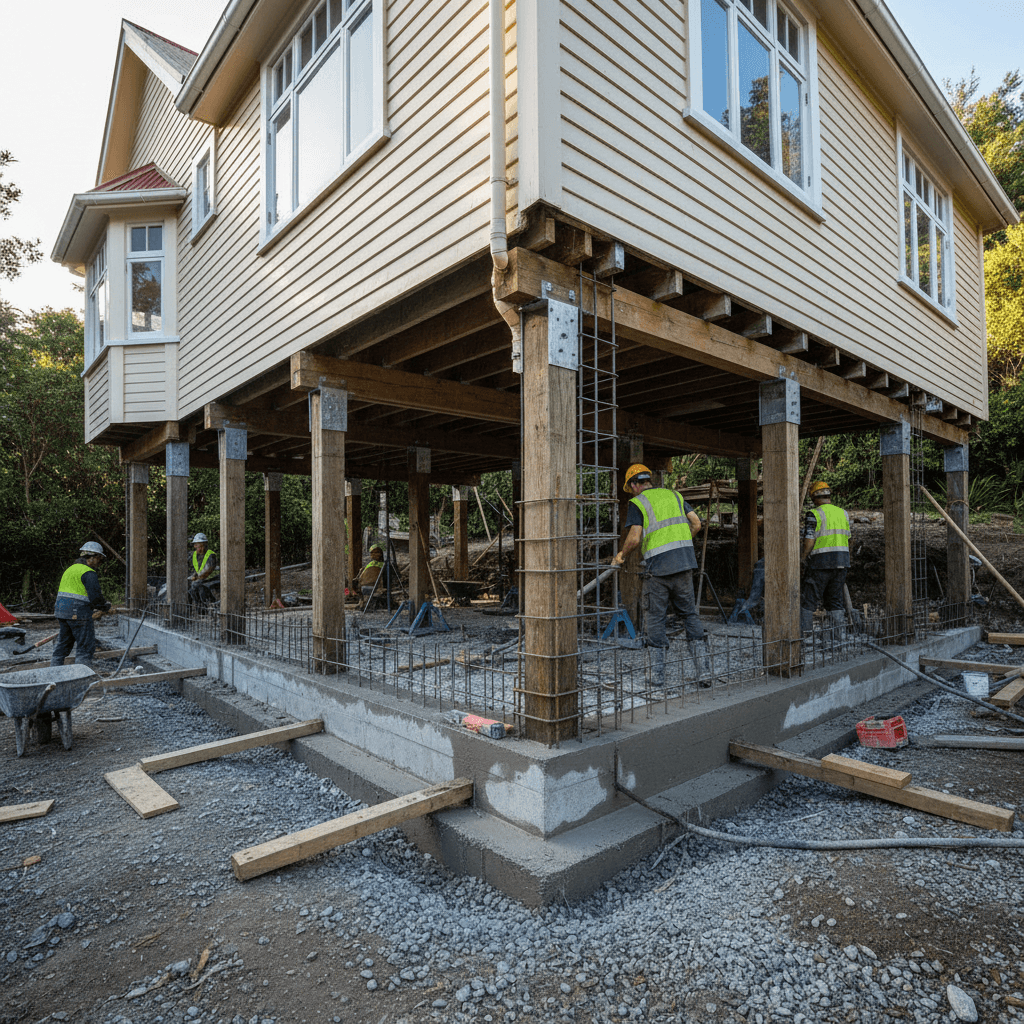
- Concrete perimeter foundations — Replacing or supplementing old piles with a continuous concrete foundation that ties the base of the house together
- Steel pile caps and connections — Adding engineered connections between existing piles and the bearer/joist system to prevent the house lifting off its foundations
- Ground anchors — Used on hillside sites to tie foundations into stable ground below the surface
- Underpinning — Extending existing foundations deeper into more stable soil or rock
Bracing upgrades
Bracing resists the lateral (sideways) forces that earthquakes generate. Most pre-1976 homes have insufficient bracing by modern standards. Upgrade options include:
- Plywood wall bracing — Structural plywood fixed to framing with specific nailing patterns provides excellent lateral resistance
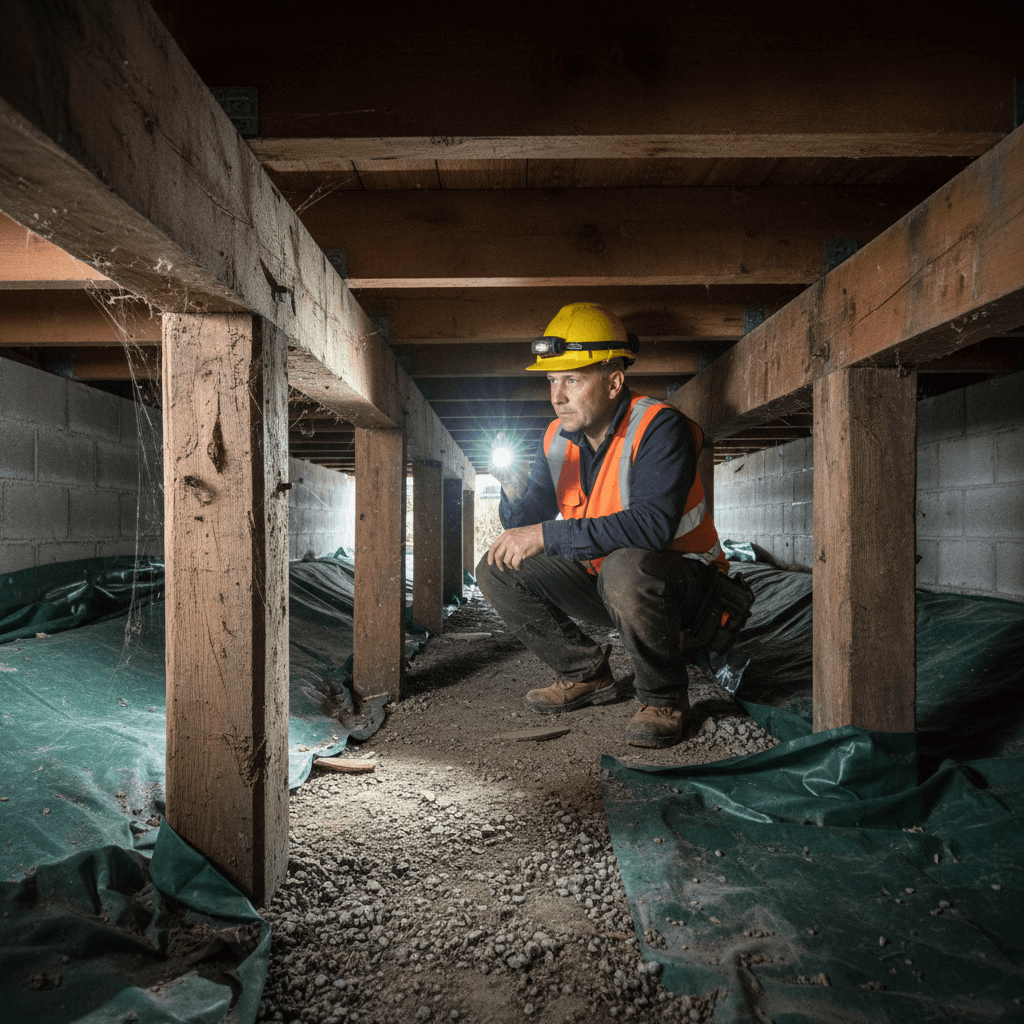
- Steel cross-bracing — Used in subfloor spaces and areas where wall bracing isn’t practical
- Engineered bracing panels — Proprietary systems that can be retrofitted within existing wall cavities
Structural connections
In an earthquake, a house needs to act as a single connected unit. Many older homes have inadequate connections between key structural elements. Strengthening typically involves:
- Roof-to-wall ties — Steel straps or brackets connecting rafters to top plates
- Wall-to-foundation connections — Hold-down bolts and brackets tying framing to foundations
- Floor diaphragm upgrades — Strengthening the floor structure so it distributes forces evenly to bracing walls
Chimney and masonry work
Unreinforced brick chimneys are one of the most common failure points in Wellington earthquakes. Options include removing the chimney above the roofline and capping it, or bracing it with steel framing. Unreinforced masonry walls may need steel reinforcement, concrete overlays, or fibre-reinforced polymer (FRP) wrapping.
Earthquake Strengthening Costs in Wellington
Costs vary widely depending on the scope of work required. Here’s a realistic guide based on typical Wellington residential projects:
| Work Type | Typical Cost Range | Notes |
|---|---|---|
| Seismic assessment | $3,000 — $8,000 | Required first step. More complex homes cost more to assess. |
| Chimney removal/bracing | $3,000 — $8,000 | Per chimney. Removal is typically cheaper than bracing. |
| Foundation upgrades | $30,000 — $80,000+ | Depends on house size and existing foundation condition. |
| Bracing and connections | $15,000 — $40,000 | Can often be done with minimal disruption to interior finishes. |
| Comprehensive strengthening | $60,000 — $200,000+ | Full upgrade bringing a pre-1976 home to 67%+ NBS. |
For high-value homes in suburbs like Oriental Bay and Roseneath, comprehensive earthquake strengthening is increasingly seen as an essential investment rather than an optional upgrade. When you’re protecting a property worth $2 million or more, spending $100,000-$200,000 to bring it up to modern seismic standards is a sound decision — both for safety and for protecting the asset’s long-term value.
Many homeowners choose to combine earthquake strengthening with a broader home renovation. This approach is often more cost-effective because the access and disruption required for structural work overlaps with renovation work. Upgrading foundations and bracing while you’re already renovating the kitchen or bathroom means you’re only paying for scaffolding, temporary protection, and consent fees once.
The Earthquake Strengthening Process
A well-managed earthquake retrofit follows a clear sequence from initial assessment through to completion. Here’s what to expect:
Step 1: Seismic assessment
A chartered structural engineer inspects your home and produces a detailed engineering evaluation (DEE) that determines the current NBS rating. This report identifies the specific weaknesses — whether that’s foundations, bracing, connections, or a combination — and recommends a target NBS rating for the strengthening work.
Step 2: Engineering design
Based on the assessment, the structural engineer designs the strengthening solution. This includes detailed drawings and specifications that your builder will follow. For homes with architectural significance, particularly heritage villas in Thorndon and Kelburn, the engineer works alongside your architect to ensure strengthening work respects the home’s character.
Step 3: Building consent
Structural strengthening work requires building consent from Wellington City Council or your local territorial authority. Your builder manages the consent application, including all engineering documentation, plans, and specifications. Consent processing typically takes 2-4 weeks.
Step 4: Construction
The construction phase varies from a few weeks for targeted work like chimney removal and subfloor bracing, to several months for comprehensive whole-house strengthening. A good builder will plan the work to minimise disruption — in many cases, you can remain living in the house during subfloor and external work.
Step 5: Inspection and sign-off
Council inspections occur at key stages during construction. Once complete, the engineer confirms the work meets the design specifications, and council issues a code compliance certificate (CCC). You’ll have documented proof of your home’s improved seismic performance — valuable for insurance and resale.
Why Choose Clearcut for Your Wellington Earthquake Strengthening
We’ve worked on structural projects across Wellington’s most demanding sites, from heritage villas in Thorndon and Wadestown to hillside properties in Khandallah and Seatoun. Earthquake strengthening requires a builder who understands both the engineering and the practical realities of working with older construction — and that’s where our experience makes the difference.
- NZ Certified Builders — Backed by the Halo 10-year residential guarantee, giving you confidence in the quality and durability of our structural work
- Structural engineering collaboration — We work closely with Wellington’s leading structural engineers to ensure every strengthening project is properly designed and executed
- Character home expertise — We understand how to carry out structural upgrades while preserving the features that make Wellington’s older homes special
- Complete project management — From initial assessment coordination through to council sign-off, we manage the entire process so you don’t have to
- Renovation integration — We regularly combine earthquake strengthening with renovation work, saving you time and money by tackling structural and aesthetic upgrades together
If you’re considering earthquake strengthening as part of a renovation, home extension, or recladding project, we can help you understand what’s involved and coordinate the structural and building work seamlessly.
Frequently Asked Questions
How do I know if my Wellington home needs earthquake strengthening?
The most reliable way is to commission a seismic assessment from a chartered structural engineer. As a general rule, homes built before 1976 — particularly those with unreinforced masonry, concrete block foundations, or brick chimneys — are most likely to benefit from strengthening. Homes on steep sites in suburbs like Kelburn, Oriental Bay, and Hataitai face additional risk from slope instability.
Can I stay in my home during earthquake strengthening work?
In most cases, yes. Subfloor work, external bracing, and chimney removal can typically be carried out while you’re living in the house. However, comprehensive strengthening that involves opening up internal walls or significant foundation work may require you to move out temporarily. Your builder will advise on this during the planning stage.
Does earthquake strengthening add value to my home?
Yes. A documented NBS rating improvement is increasingly valued by buyers and insurers in Wellington. Properties with confirmed earthquake strengthening typically command higher prices than comparable un-strengthened homes, and insurance premiums may be lower. For high-value properties, it’s a significant selling point.
How long does earthquake strengthening take?
Targeted work like chimney removal and subfloor bracing can be completed in 2-4 weeks. Comprehensive whole-house strengthening typically takes 2-4 months, depending on the scope. If combined with a renovation, the structural work is integrated into the broader project timeline.
Should I combine earthquake strengthening with my renovation?
This is often the most cost-effective approach. Renovation work frequently requires opening up walls, accessing subfloor spaces, and working around foundations — all of which overlap with earthquake retrofit work. Combining the two means you pay for access, scaffolding, and consent processes once rather than twice. Read more about planning a major home renovation in Wellington.
What NBS rating should I aim for?
Most structural engineers recommend targeting at least 67% NBS, which brings your home above the “earthquake risk” threshold. Some homeowners, particularly those with high-value properties, choose to target 100% NBS for maximum protection and peace of mind. Your engineer will recommend the most appropriate target based on your home’s construction and your budget.