Quick Answer: Building a retaining wall in Wellington requires building consent for walls over 1.5 meters high or any height supporting loads like driveways. Costs range from $100-$600 per square meter depending on materials. Professional installation ensures compliance with NZ Building Code and proper drainage for Wellington’s challenging terrain.
What’s in This Guide
- Consent Requirements and Regulations
- Types of Retaining Walls and Materials
- Costs and Budgeting
- Construction Process and Timeline
- Wellington-Specific Considerations
- Why Choose Clearcut Building Solutions
- FAQs
Consent Requirements and Regulations
Understanding Wellington’s retaining wall regulations is crucial before starting your project. The rules are designed to ensure safety and structural integrity, particularly important given our city’s seismic activity and steep terrain.
When You Need Building Consent
According to NZ Building Code requirements, you need building consent if your retaining wall:
- Exceeds 1.5 meters in height
- Supports any surcharge loads (driveways, buildings, or vehicle areas) regardless of height
- Is built in unstable soil conditions
- Forms part of a building structure
The 1.5-meter threshold exists because taller walls experience significantly greater soil pressure, making proper engineering essential for safety. Even walls under 1.5 meters must comply with the Building Code, particularly regarding drainage and stability.
NZS 3604 Compliance
For retaining walls up to 1.5 meters, you can follow NZS 3604 guidelines without requiring specific engineering design, provided:
- The wall meets prescribed drainage requirements
- Soil conditions are stable and suitable
- No surcharge loads are present
- Construction follows approved methods for gravity or cantilever walls
This standard serves as an approved compliance pathway under the Building Code, simplifying the process for smaller walls.
Types of Retaining Walls and Materials
Wellington homeowners have several options when choosing retaining wall materials, each with distinct advantages for different situations and budgets.
Timber Retaining Walls
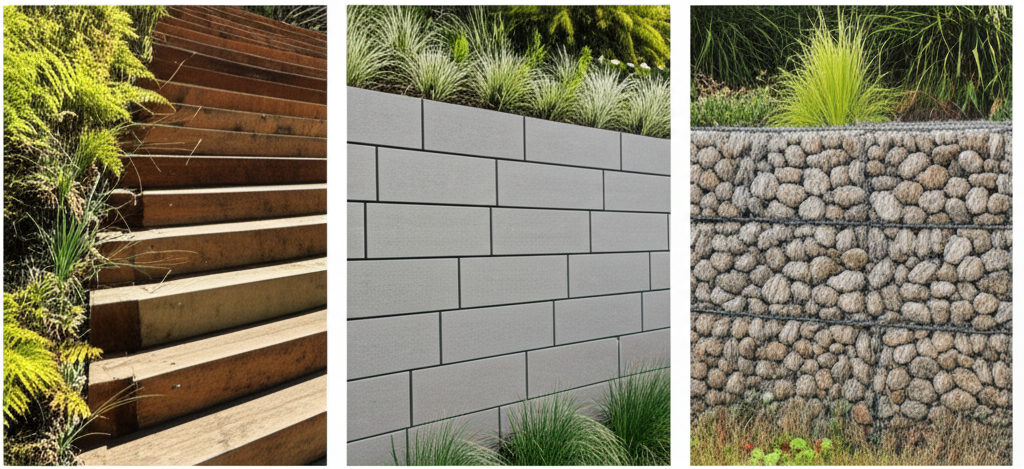
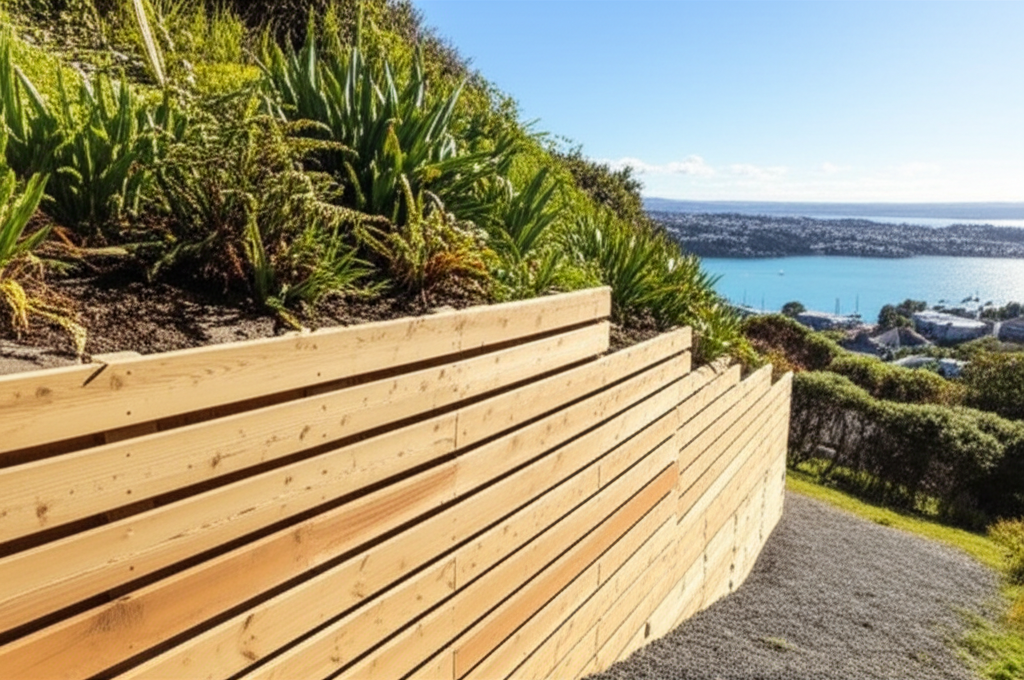
Timber walls remain popular for residential properties due to their natural appearance and cost-effectiveness. Options include:
- Treated pine sleepers: Economical choice for walls up to 1.2m
- Hardwood sleepers: More durable but higher cost
- Pole walls: Suitable for taller walls with proper engineering
Timber walls blend well with gardens and can be stained to match your property’s aesthetic. However, they require regular maintenance and have a shorter lifespan than masonry options.
Concrete Block Walls
Concrete masonry offers excellent durability and strength for Wellington’s conditions. Popular systems include:
- Standard concrete blocks: Versatile and cost-effective
- Interlocking block systems: Easier DIY installation for smaller walls
- Reinforced blockwork: Essential for taller walls or heavy loads
These walls can be rendered, painted, or clad with stone veneer for enhanced appearance.
Gabion Walls
Gabion baskets filled with rocks create distinctive, modern-looking walls that offer:
- Excellent drainage properties
- Flexibility for ground movement
- Environmentally friendly construction
- Unique aesthetic appeal
While more expensive initially, gabion walls require minimal maintenance and suit Wellington’s coastal environment well.
Costs and Budgeting
Retaining wall costs vary significantly based on materials, height, site access, and ground conditions. Here’s what Wellington homeowners can expect:
| Wall Type | Cost per m² | Typical Height Range | Lifespan |
|---|---|---|---|
| Timber Sleepers | $100-$250 | Up to 1.5m | 15-25 years |
| Concrete Blocks | $200-$500 | Up to 3m+ | 50+ years |
| Gabion Baskets | $300-$600 | Up to 6m+ | 50-100 years |
| Poured Concrete | $350-$700 | Any height | 50+ years |
Additional Cost Factors
Beyond materials, budget for these potential expenses:
- Site preparation: $50-$150 per m² for excavation
- Drainage system: $30-$80 per linear meter
- Engineering reports: $800-$2,500 for walls over 1.5m
- Building consent: $500-$1,500 depending on complexity
- Resource consent: If required for significant earthworks
Difficult access, poor soil conditions, or the need for temporary shoring can increase costs substantially. Always obtain multiple quotes and ensure they include all necessary components.
Construction Process and Timeline
Building a retaining wall properly involves several critical stages that ensure long-term stability and compliance.
Site Assessment and Design
Professional assessment identifies:
- Soil type and stability
- Water table levels
- Load requirements
- Drainage needs
- Boundary considerations
This stage typically takes 1-2 weeks including any required engineering input.
Foundation Preparation
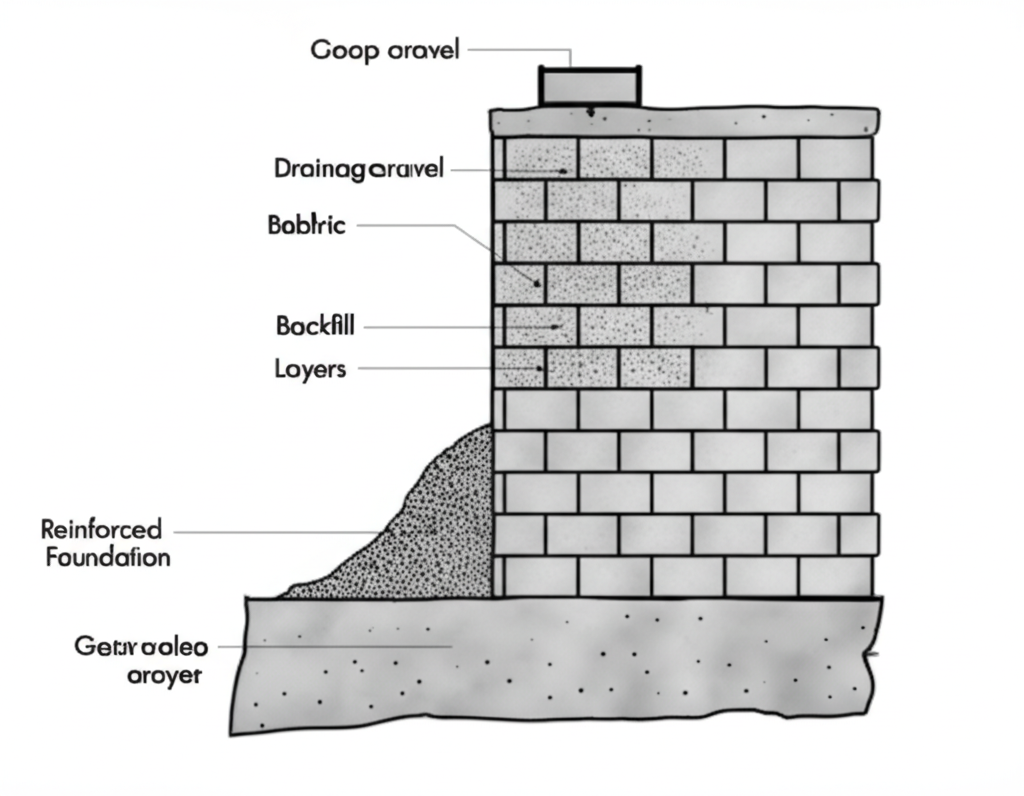
Proper foundations prevent wall failure. The process includes:
- Excavating to required depth (typically 100mm per meter of wall height)
- Creating level base platform
- Installing drainage aggregate layer
- Compacting foundation materials
- Setting out string lines for accuracy
Wall Construction
Construction methods vary by material but always require:
- Level installation of first course
- Regular checking of alignment and level
- Proper backfilling techniques
- Installation of drainage system behind wall
- Compaction of backfill in layers
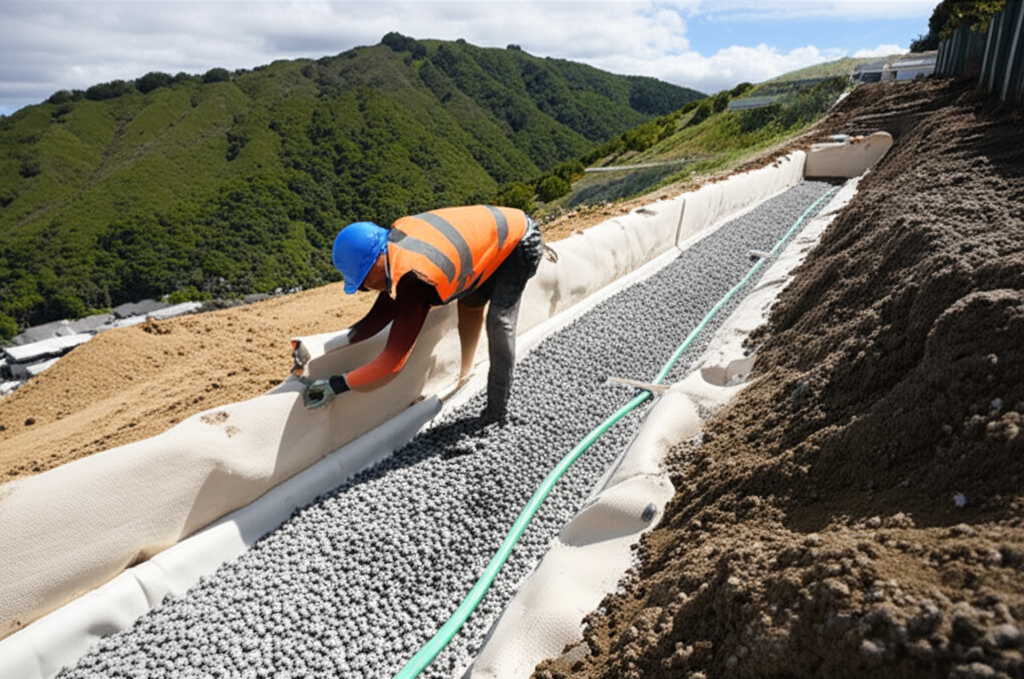
Drainage Installation
Critical for wall longevity, drainage systems include:
- Perforated drainage pipes at base
- Drainage aggregate behind wall
- Geotextile fabric to prevent soil migration
- Weep holes at regular intervals
- Surface water diversion above wall
Poor drainage causes most retaining wall failures, making this step essential.
Wellington-Specific Considerations
Wellington’s unique geography and climate create specific challenges for retaining wall construction.
Seismic Design Requirements
Our earthquake-prone region demands:
- Reinforced construction for walls over 1.5m
- Flexible joint design to handle movement
- Deeper foundations in loose soils
- Professional engineering for hillside locations
Wind Loading
Wellington’s notorious winds affect retaining walls by:
- Increasing lateral pressure on exposed walls
- Requiring consideration of fence/structure loads above walls
- Necessitating robust construction methods
Steep Site Challenges
Many Wellington properties feature challenging slopes requiring:
- Terraced wall systems for extreme grades
- Temporary shoring during construction
- Specialized equipment access solutions
- Careful staging to maintain site stability
Council Requirements
Wellington City Council may require additional documentation including:
- Geotechnical reports for hillside properties
- Neighbor consultation for boundary walls
- Stormwater management plans
- Heritage area considerations
Why Choose Clearcut Building Solutions for Your Retaining Wall
Building retaining walls in Wellington requires local expertise and proven experience. Our comprehensive renovation services include professional retaining wall construction that meets all council requirements and Building Code standards.
With over 20 years serving Wellington homeowners, we understand the unique challenges of building on our city’s steep terrain. From initial design through to final landscaping, we manage every aspect of your retaining wall project.
Our team specializes in:
- Engineered solutions for challenging sites
- Seamless integration with existing structures
- Cost-effective material recommendations
- Complete project management including consents
- Guaranteed workmanship and code compliance
Frequently Asked Questions
Do I need consent for a 1-meter high retaining wall?
Generally no, unless the wall supports any loads like driveways, buildings, or is built in unstable ground. However, it must still comply with Building Code requirements for drainage and construction standards. Check with Wellington City Council if unsure.
How long does it take to build a retaining wall?
A typical residential retaining wall takes 1-3 weeks to complete, depending on size and complexity. This includes site preparation, foundation work, wall construction, and drainage installation. Larger engineered walls may take 4-6 weeks.
What’s the most cost-effective retaining wall option?
Timber sleeper walls offer the lowest upfront cost at $100-$250 per square meter. However, concrete block walls, though more expensive initially, often provide better long-term value due to their 50+ year lifespan and minimal maintenance requirements.
Can I build a retaining wall myself?
DIY construction is possible for walls under 1 meter without surcharge loads, provided you follow NZS 3604 guidelines. However, professional installation ensures proper drainage, compliance, and long-term stability – critical for Wellington’s challenging conditions.
How close to the boundary can I build a retaining wall?
Retaining walls can typically be built on boundaries, but you should consult neighbors and check council requirements. Walls over 1.5m near boundaries often require neighbor consent. Professional advice ensures compliance with local regulations.
What causes retaining walls to fail?
Poor drainage causes most failures, leading to water pressure buildup behind the wall. Other causes include inadequate foundations, substandard construction, lack of reinforcement, and ground movement. Professional design and construction prevent these issues.